Some places in Bolivia arrive with a trumpet.
Uyuni gives you the big white miracle. La Paz throws altitude, cable cars and beautiful chaos straight into your face. Lake Titicaca has that ancient, cold, holy thing going on — all wind, water and myth.
Torotoro is different.
Torotoro does not perform.
It sits out there in the dry valleys of central Bolivia, quietly holding on to dinosaur footprints, limestone caves, red canyons, fossils, dusty roads and small-town silences. It does not care if you came with a camera, a guidebook or a romantic idea of adventure. It will make you walk. It will make you sweat. It may make you crawl through a cave in a helmet, wondering why you did not choose a nice hotel pool instead.
And then, somewhere between a canyon wall, a fossilised footprint and a village street with more dust than drama, it gets you.
Torotoro National Park Bolivia is one of the country’s most underrated adventure destinations. It is raw, strange, physical and deeply memorable. Not polished. Not packaged into perfection. Not trying to be the next Uyuni.
Good.
Bolivia has enough places posing for postcards. Torotoro feels like the country left a door open to its prehistoric basement and forgot to advertise it properly.
Where Is Torotoro National Park in Bolivia?
Torotoro National Park is located in northern Potosí, in central Bolivia. On paper, that sounds simple. In practice, most travellers reach it from Cochabamba, the closest major city and the usual gateway to the park.
That is worth knowing before you start drawing ambitious lines on a map.
Bolivia looks manageable from a distance. Then you get on the road and remember that mountains, valleys and old geography have opinions. Distances here are not just measured in kilometres. They are measured in road conditions, weather, curves, patience and how much dust your lungs are willing to negotiate with.
From Cochabamba, the journey to Torotoro takes you through rural Bolivia: dry hills, small communities, winding roads and landscapes that feel increasingly removed from the usual tourist circuit.
By the time you arrive, the mood has changed.
This is not La Paz. This is not Uyuni. This is not a quick stop on a checklist. Torotoro asks you to slow down, get out of the car and look at the ground.
Because sometimes the best thing in Bolivia is not above you.
Sometimes it is under your boots.
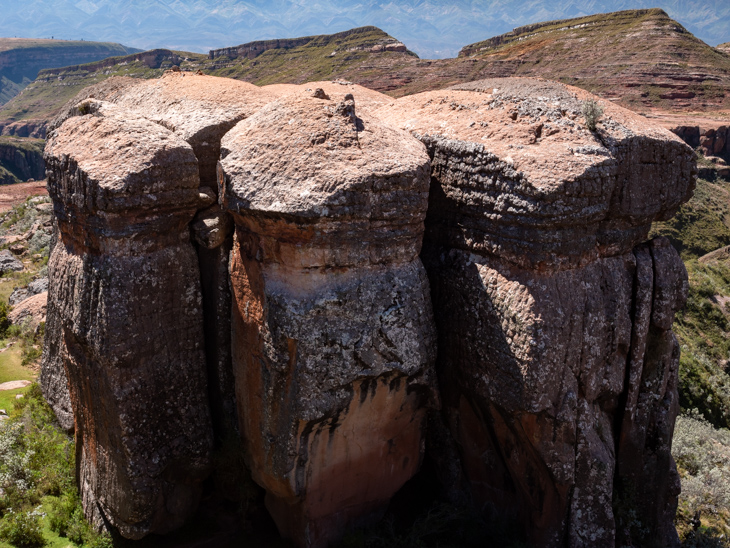
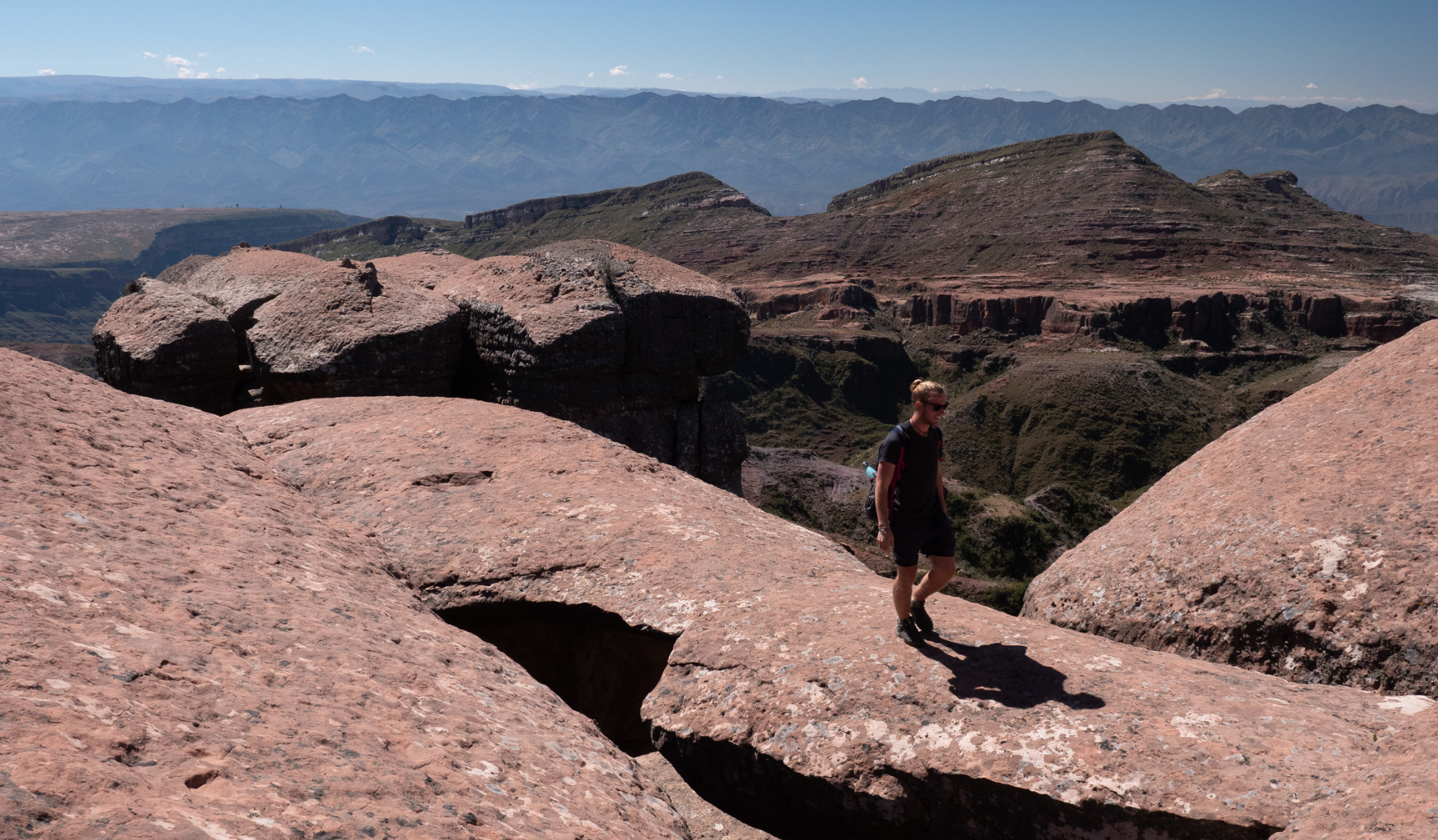
Amazing rock formations in la Ciudad de Itas
Why Visit Torotoro National Park Bolivia?
You visit Torotoro because you want Bolivia with its sleeves rolled up.
You want dinosaur footprints pressed into stone. You want canyons that drop suddenly into the earth. You want caves where the darkness feels old and slightly unreasonable. You want rock formations carved by weather, fossils that whisper about ancient seas, and trails where nobody is trying to sell you a mass-produced souvenir every five metres.
You visit because you are curious.
And curiosity is the right attitude for Torotoro.
This is a place for travellers who like the rough edges. People who understand that “beautiful” does not always mean comfortable. People who hear the words “dinosaur tracks” and immediately become ten years old again, in the best possible way.
Torotoro National Park Bolivia is ideal for:
- Dinosaur footprint lovers
- Geology nerds, proudly or secretly
- Hikers
- Cave explorers
- Families with curious older children
- Photographers
- Travellers who want Bolivia beyond the obvious
- Anyone who prefers a real place over a polished one
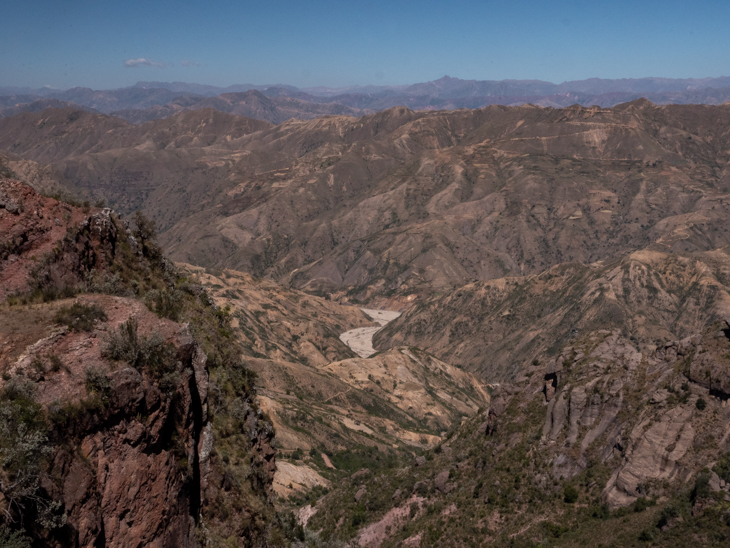
The views on the drive to la Ciudad de Itas
It is not a luxury escape. It is not smooth. It is not trying to be cute.
It is better than that.
It is alive with old stone, dry wind and the kind of silence that makes you pay attention.
What Is Torotoro National Park Famous For?
Torotoro National Park is famous for dinosaur footprints, caves, canyons, fossils and surreal rock formations.
That sounds like a tourism board sentence, but in this case, it is actually true.
The park is one of Bolivia’s most fascinating paleontological areas. Fossilised dinosaur tracks appear in different zones, preserved in stone like a prehistoric accident that somehow survived millions of years of pressure, weather and time.
There are also deep canyons, underground caves, marine fossils, strange limestone landscapes and high rock formations that look like the work of a very patient, slightly mad sculptor.
The main highlights include:
- El Vergel Canyon
- Umajalanta Cave
- Ciudad de Itas
- Dinosaur footprint sites
- Fossil areas
- Rock formations and viewpoints
- Dry valleys and rural Andean landscapes
But the real pleasure of Torotoro is not ticking them off.
It is the feeling that every place in the park belongs to a different chapter of the earth’s biography.
https://es.wikipedia.org/wiki/Toro_Toro
Dinosaur Footprints in Torotoro National Park
Let’s be honest. Dinosaur footprints should not still be exciting when you are an adult.
And yet they are.
There is something absurdly moving about standing in front of a fossilised track and realising that a living creature crossed that ground millions of years before you were born, before your country existed, before language, before money, before hotel reviews and domestic flights and people complaining about Wi-Fi.
Something walked there.
It had weight. It had hunger. It had direction. It pressed its foot into mud, and somehow the earth kept the receipt.
That is the magic of the dinosaur footprints in Torotoro National Park.
Some tracks are believed to belong to theropods, the carnivorous dinosaurs that moved on two legs. Others are linked to larger herbivorous species. You do not need to be a paleontologist to feel the power of it. You just need a guide who can explain what you are looking at and a little imagination.
Without context, some tracks may look like marks in rock.
With context, the landscape starts breathing.
Torotoro is not only scenic. It is evidence.
Best Things to Do in Torotoro National Park Bolivia
Torotoro is not a place where you sit in a van and admire things through a window.
You walk. You descend. You climb. You enter caves. You stare at stone. You listen to guides. You get dusty.
That is the deal.
Here are the main experiences that make Torotoro National Park Bolivia worth the journey.
El Vergel Canyon
El Vergel is one of the park’s signature experiences, and it knows how to make an entrance.
You start above the canyon, looking down into a dramatic crack in the earth. The walls fall away sharply. The air is dry. The light is hard. Everything feels exposed.
Then you descend.
Stone steps take you down toward the bottom of the canyon, and the mood changes. The dry world above gives way to cooler air, vegetation, water and shadow. Depending on the season, you may find waterfalls and natural pools tucked into the canyon floor.
That contrast is what makes El Vergel special.
Above: dust, sun, stone.
Below: water, green, echo.
It is not a difficult idea, but it works. The canyon reminds you that landscapes are not one thing. They have layers. Torotoro is very good at layers.
El Vergel is best for travellers who enjoy hiking, viewpoints, photography and that satisfying feeling of earning the view instead of just parking next to it.
Umajalanta Cave
Umajalanta Cave is where Torotoro stops being charming and starts testing your relationship with small dark spaces.
This is not a polite cave with perfect lighting and signs telling you where to stand for the photo.
You enter with a helmet and flashlight. You move through rock chambers, narrow passages and dark sections where the body becomes very aware of itself. You may need to crouch, slide, bend or use your hands.
Some people love this.
Some people discover, halfway through, that they are not cave people.
Both reactions are valid.
Umajalanta Cave is one of the most adventurous experiences in Torotoro National Park, but it is not for everyone. Travellers with strong claustrophobia or mobility issues should think carefully before doing it.
For those who enjoy underground adventure, though, it is unforgettable.
There is something deeply strange about being inside the earth. No horizon. No sky. No big inspirational travel moment. Just rock, darkness, breath and the guide’s light moving ahead of you.
It is not comfortable.
That is why you remember it.
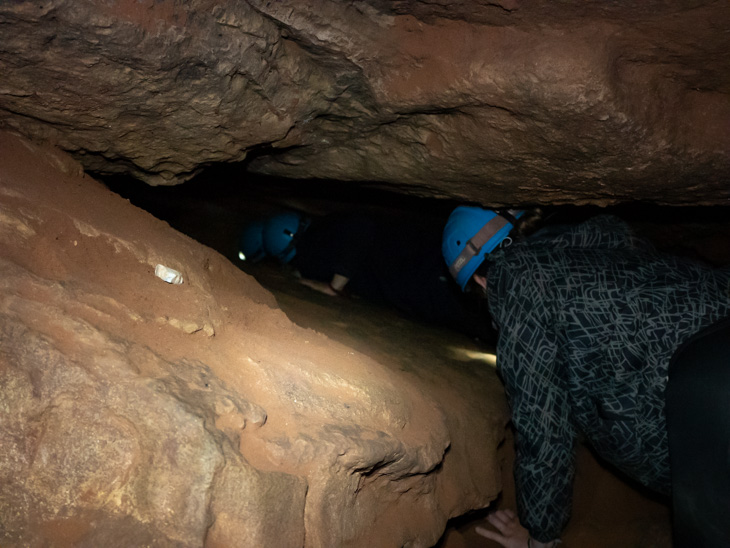
You’ll need to crawl through tight spaces in the caves
Ciudad de Itas
Ciudad de Itas feels like a city designed by wind, water and time — none of them in a hurry.
Located at a higher altitude than the town of Torotoro, this area is full of massive rock formations, natural corridors, caves, stone windows and sculpted walls. The name means “City of Stone,” and for once the name is not overselling it.
It really does feel like a ruined city.
Not built by people, but by weather. By erosion. By whatever long, slow violence turns rock into architecture.
This is one of the most photogenic places in Torotoro National Park Bolivia. The shapes are strange. The scale is impressive. The landscape feels open, remote and slightly theatrical.
Ciudad de Itas is ideal for travellers who like geology, wide views and places that feel a little unreal without needing special effects.
It is also one of the best reminders that Torotoro is not pretty in a soft way.
It is beautiful like a bone is beautiful.
Hard, old, exposed and honest.
Dinosaur Footprint Sites
There are several dinosaur footprint sites around Torotoro, and the exact visits can vary depending on the route, guide and local conditions.
This is where having a good local guide matters.
A footprint without explanation is just a shape. A footprint with context becomes a story: what kind of dinosaur, how it may have moved, what the terrain might have been like, how the print survived, and what it tells us about the ancient environment.
You start looking differently.
Fossils and Ancient Marine Life
One of the great pleasures of Torotoro is how often it reminds you that the world used to be completely different.
In fossil areas around the park, travellers can see signs of ancient life, including marine fossils. This surprises many visitors. Marine life? Here? In dry, inland Bolivia?
Yes.
The earth has moved. Seas have come and gone. Mountains have risen. The planet has never cared much for human assumptions about permanence.
These fossil areas add depth to the Torotoro experience. They make the park feel less like a collection of attractions and more like a long geological argument.
You may come for the dinosaurs.
You stay for the unsettling reminder that everything changes.
How Many Days Do You Need in Torotoro National Park?
You need at least two days in Torotoro National Park.
Three is better.
One day is too rushed unless you enjoy turning meaningful places into errands.
A 2-day itinerary can cover the main highlights if logistics are well organised. A 3-day itinerary gives you more breathing room and allows Torotoro to feel like a destination rather than a detour.
Suggested 2-Day Torotoro Itinerary
Day 1: Cochabamba to Torotoro + El Vergel Canyon
Leave Cochabamba early and travel by road to Torotoro. After arrival, visit El Vergel Canyon, nearby viewpoints and dinosaur footprint areas, depending on timing and local conditions.
Day 2: Ciudad de Itas + Umajalanta Cave
Visit Ciudad de Itas in the morning, then explore Umajalanta Cave before returning to Cochabamba or continuing your Bolivia journey.
This version works if you are short on time, but it can feel intense.
Suggested 3-Day Torotoro Itinerary
Day 1: Cochabamba to Torotoro
Travel from Cochabamba to Torotoro, settle in and enjoy the village atmosphere or nearby sites, depending on arrival time.
Day 2: El Vergel Canyon + Dinosaur Footprints
Spend the day exploring the canyon, viewpoints and footprint sites with a local guide.
Day 3: Ciudad de Itas + Umajalanta Cave
Visit the stone formations of Ciudad de Itas and the underground world of Umajalanta Cave before returning to Cochabamba or continuing onward.
This is the better rhythm.
Torotoro is not a place that improves when rushed.
How to Get to Torotoro National Park
Most travellers get to Torotoro National Park by road from Cochabamba.
Private transport is the most comfortable option, especially if you have limited time or want a smoother travel experience. Public transport may be possible, but it is more basic, less flexible and slower.
The road journey is part of the experience. You leave the city behind and enter a more rural, dry and rugged Bolivia. The landscape changes gradually. The noise drops. The dust increases. The feeling of distance becomes real.
If you are combining Torotoro with Sucre, Potosí, Uyuni or La Paz, the route should be planned carefully. Bolivia is not a country where you casually “fit things in” without considering roads, altitude, timing and fatigue.
A good itinerary matters here.
Do You Need a Guide in Torotoro National Park?
Yes, many areas of Torotoro National Park require a local guide.
And even where a guide is not strictly about access, it is still a very good idea.
A guide adds safety, context and meaning. In a place like Torotoro, that changes everything. You learn how the canyon was formed, what the footprints mean, why the fossils are there, and how to move safely through caves and trails.
Torotoro is not only about seeing.
It is about understanding what you are seeing.
Local guiding also supports the community, which matters in a destination where tourism is still smaller and more local than in Bolivia’s headline attractions.
Is Torotoro National Park Worth Visiting?
Yes, Torotoro National Park is absolutely worth visiting.
But not for everyone.
If your idea of a good trip is luxury hotels, easy roads, perfect infrastructure and soft adventure, Torotoro may not be your place. There are better destinations for comfort.
Torotoro is for travellers who like a little friction.
People who do not mind dust. People who can handle basic accommodation. People who are curious enough to walk, descend, crawl, climb, listen and look closely.
It is for people who want Bolivia beyond the obvious.
If that sounds like you, Torotoro is not just worth visiting.
It may become one of the places you talk about more than you expected.
Torotoro vs Uyuni: Which One Should You Choose?
Torotoro and Uyuni could not be more different.
The Uyuni Salt Flats are cinematic, vast and surreal. Uyuni is salt, sky, reflection, silence and scale. It is one of the most iconic landscapes in South America for a reason.
Torotoro is more physical. More rugged. More intimate. Less about the perfect wide shot and more about getting close to the earth.
Uyuni makes you feel small under the sky.
Torotoro makes you feel temporary on the planet.
Choose Uyuni if you want the grand, impossible landscape.
Choose Torotoro if you want caves, canyons, dinosaur footprints and geological weirdness.
Where to Stay in Torotoro
For the time being, accommodation in Torotoro is generally basic. Wifi is non-existent, hot water is intermittent and rooms are simple. In spite of this, we’ve found a couple of hotels that will keep you very comfortable indeed.
Cabañas Umajalanta
Although it’s located 8km outside of Torotoro, Cabañas Umajalanta is one of the best hotels in the area. This boutique hotel only has 3 two-bedroom bungalows on the property, each of which can host up to 6 guests. It has its own fantastic restaurant and a stunning terrace with views of the Torotoro landscape. You won’t get a better sight of the sinclinales than this one.
from US$40

The view from Cabañas Umajalanta terrace
Rumi Kipu Ecohotel
This boutique ecohotel is designed with its majestic surroundings and archaeology in mind. It offers sweeping views of the Torotoro mountains and operates with a self-sufficiency philosophy. There’s a focus on community cooperation and social responsibility. The charming rooms come with private bathrooms and they offer healthy, organic food at the restaurant on-site.
from US$ 50
https://www.youtube.com/watch?v=x7cMFp1xAA0
LIKE IT? PIN IT!