Most people arrive in Cusco knowing what they want to see.
Machu Picchu. The Sacred Valley. Perhaps the Inca Trail.
What they don’t always expect is to encounter a world that cannot be understood through archaeological sites alone.
High in the Andes, Q’ero communities have carried their language, ceremonies and relationship with the natural world from one generation to another. For them, the mountains are more than a beautiful backdrop. Pachamama is more than a symbol. Coca is more than a tea offered to travelers struggling with altitude.
These are parts of a living relationship between people and the world around them.
And this is where an Andean spiritual cleansing in Cusco really begins.
Not with the promise that two hours will transform your life.
Not with a performance created for visitors.
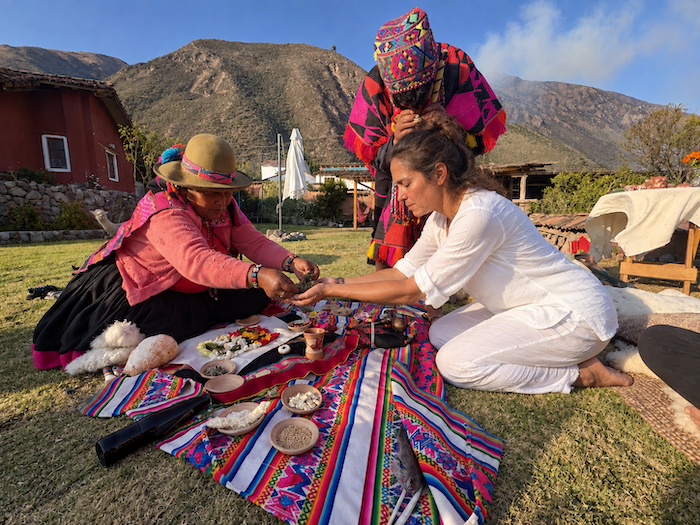
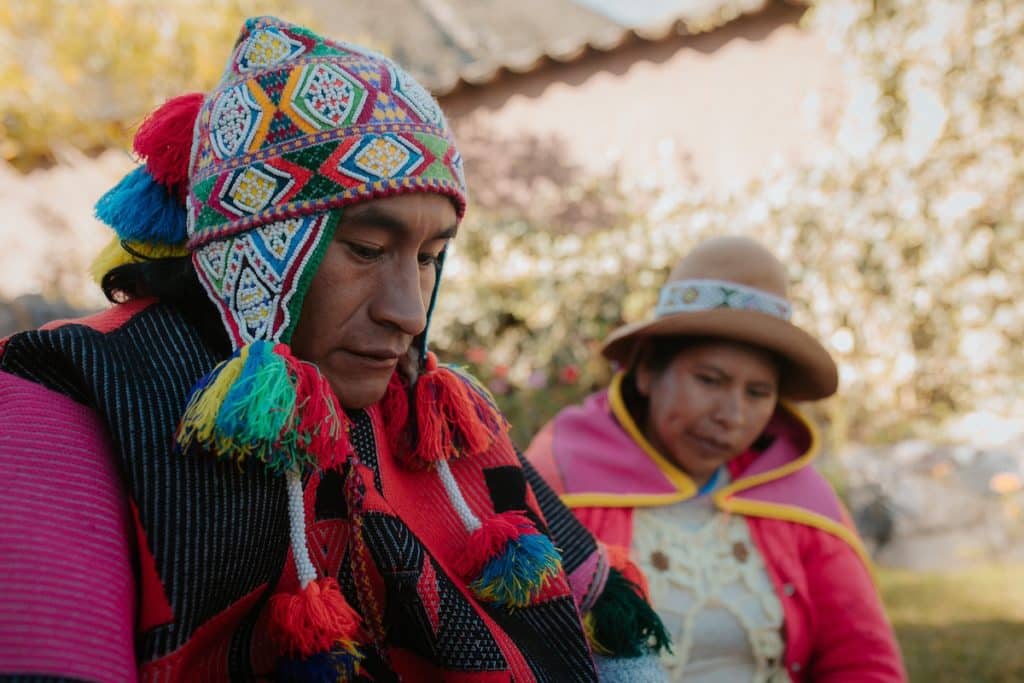
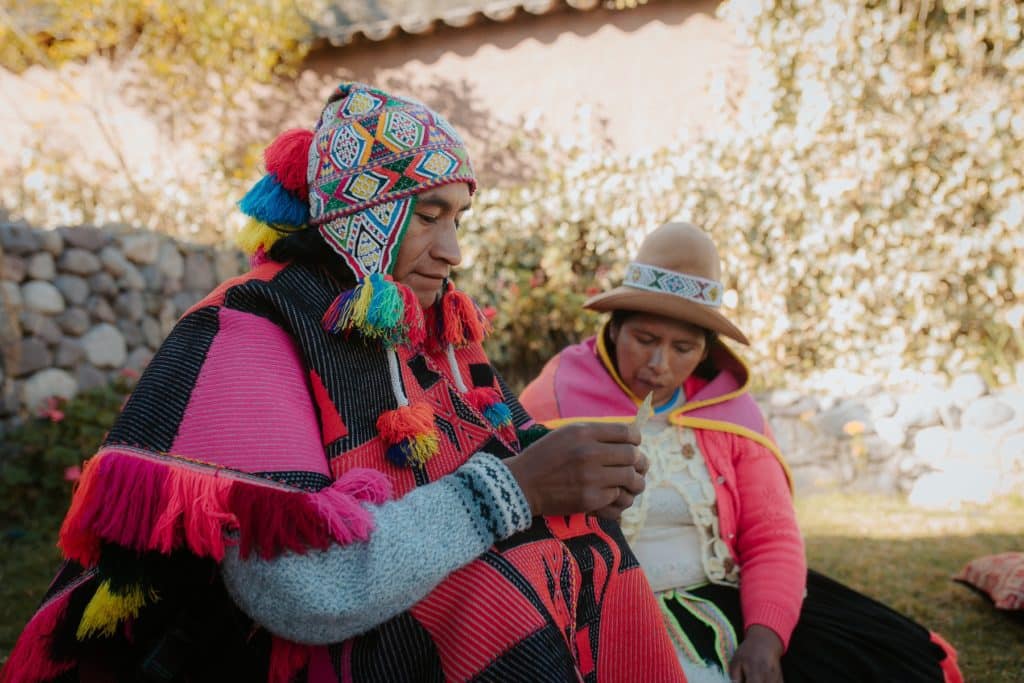
But perhaps with something much simpler: a Q’ero paqo, a woven cloth, a handful of coca leaves, the mountains around you — and enough time to listen.

The Q’ero: a tradition that is still alive
When we talk about the Andes with travelers, conversations often begin with the Incas.
The Incas believed this. The Incas practiced that. The Incas built here.
Everything seems to be spoken about in the past tense.
But the Andes did not stop living when the Inca Empire disappeared.
The Q’ero are here today.
In their communities in the high Andes of the Cusco region, Quechua is spoken and traditions connected with weaving, pastoral life, music, agriculture and ceremony continue to be carried forward.
Among their spiritual practitioners are the paqos.
The word shaman is familiar to international travelers and is often used when searching for spiritual experiences in Peru. But paqo belongs to an Andean context and describes a practitioner whose knowledge is connected to a particular understanding of people, nature, Pachamama and the sacred mountains.
When you sit with a Q’ero paqo, you are therefore not meeting someone dressed up to recreate an ancient ceremony.
You are meeting a person carrying knowledge that still has a place in their community and their life.
For us, that distinction matters.


A world in which mountains are more than mountains
Spend enough time in the Andes and eventually you will hear someone speak about the Apus.
An Apu is a sacred mountain, but translating the word simply as “mountain” misses much of its meaning.
Within Andean traditions, Apus can be understood as powerful presences connected with the landscape and the communities living around them.
And then there is Pachamama.
Mother Earth.
Again, the translation is almost too simple.
Pachamama is not merely the soil beneath our feet. She belongs to a much larger relationship with fertility, nourishment, life, cycles and the earth that sustains us.
This relationship is not one-directional.
You receive.
You also give.
And that brings us to one of the most beautiful concepts in Andean life:
ayni.
Reciprocity.
If the earth gives us food, we acknowledge what we have received.
If someone gives to us, we give back.
If life has been generous, generosity should continue moving.
That idea becomes visible during the ceremony.
The ceremony usually begins quietly
There is no stage.
No dramatic announcement.
No countdown to spiritual transformation.
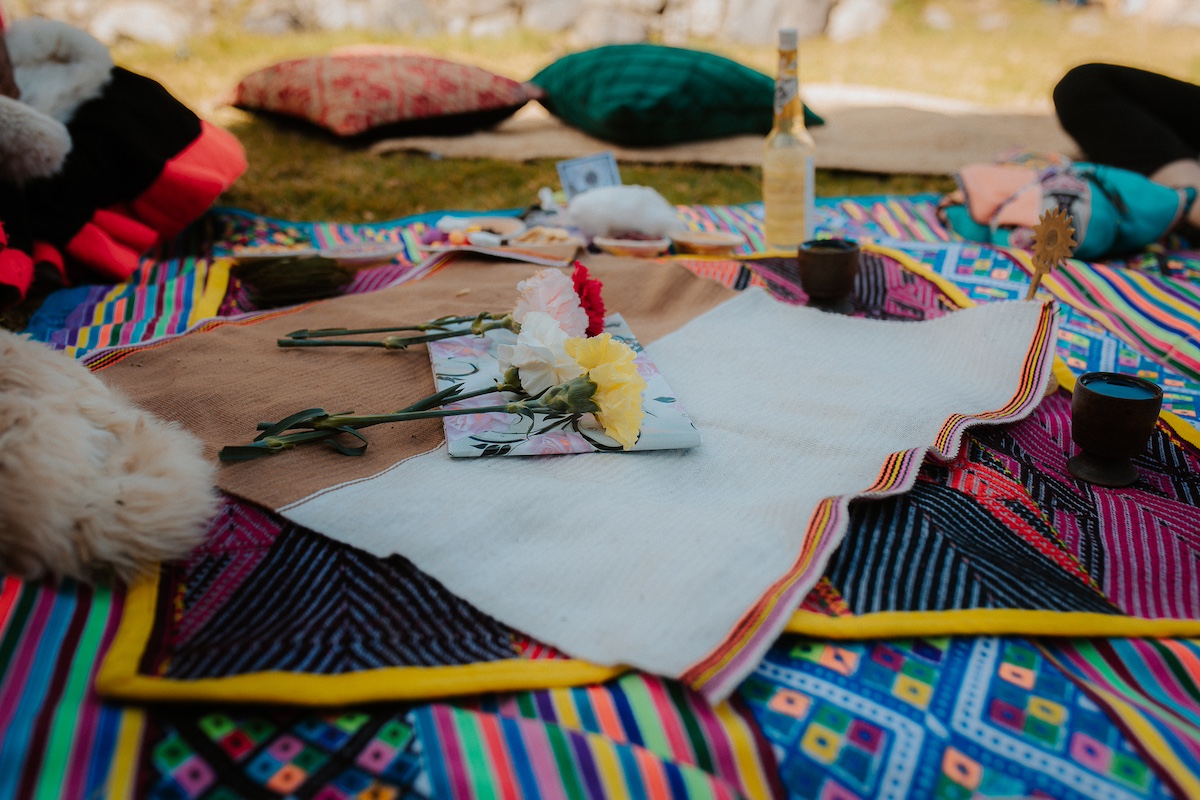
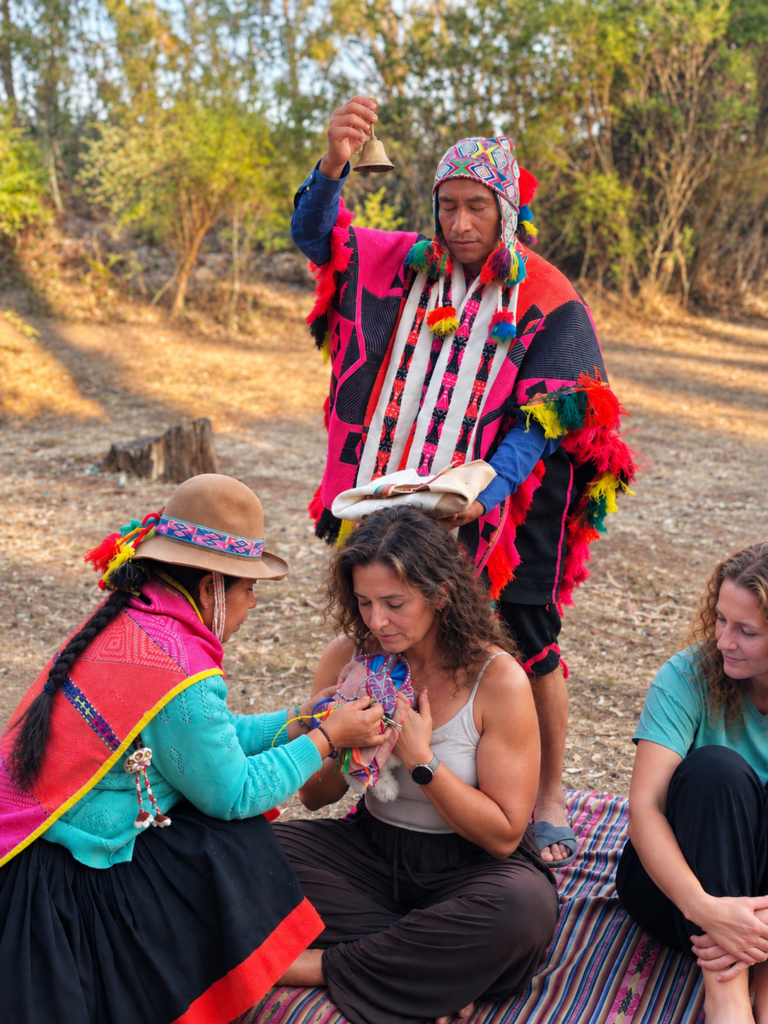
The paqo prepares the ceremonial space.
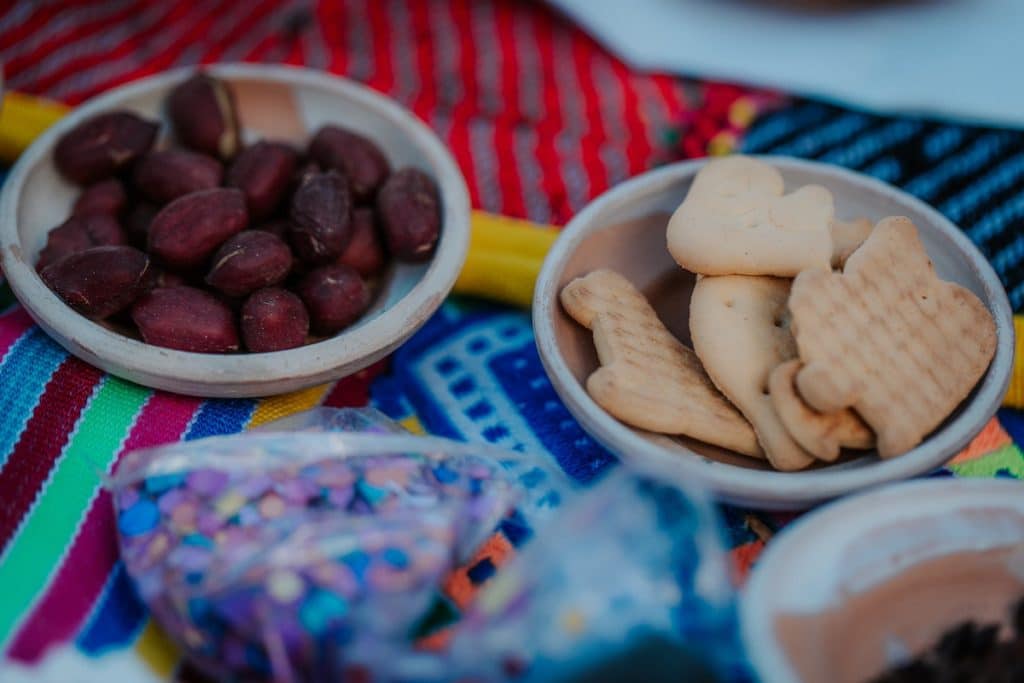
A woven textile is opened.
The coca leaves come out.
By this point in a trip through Peru, most travelers have already encountered coca. There may have been coca tea at the hotel, coca candies in a shop or a handful of leaves offered during a hike.
Here, coca has another role.
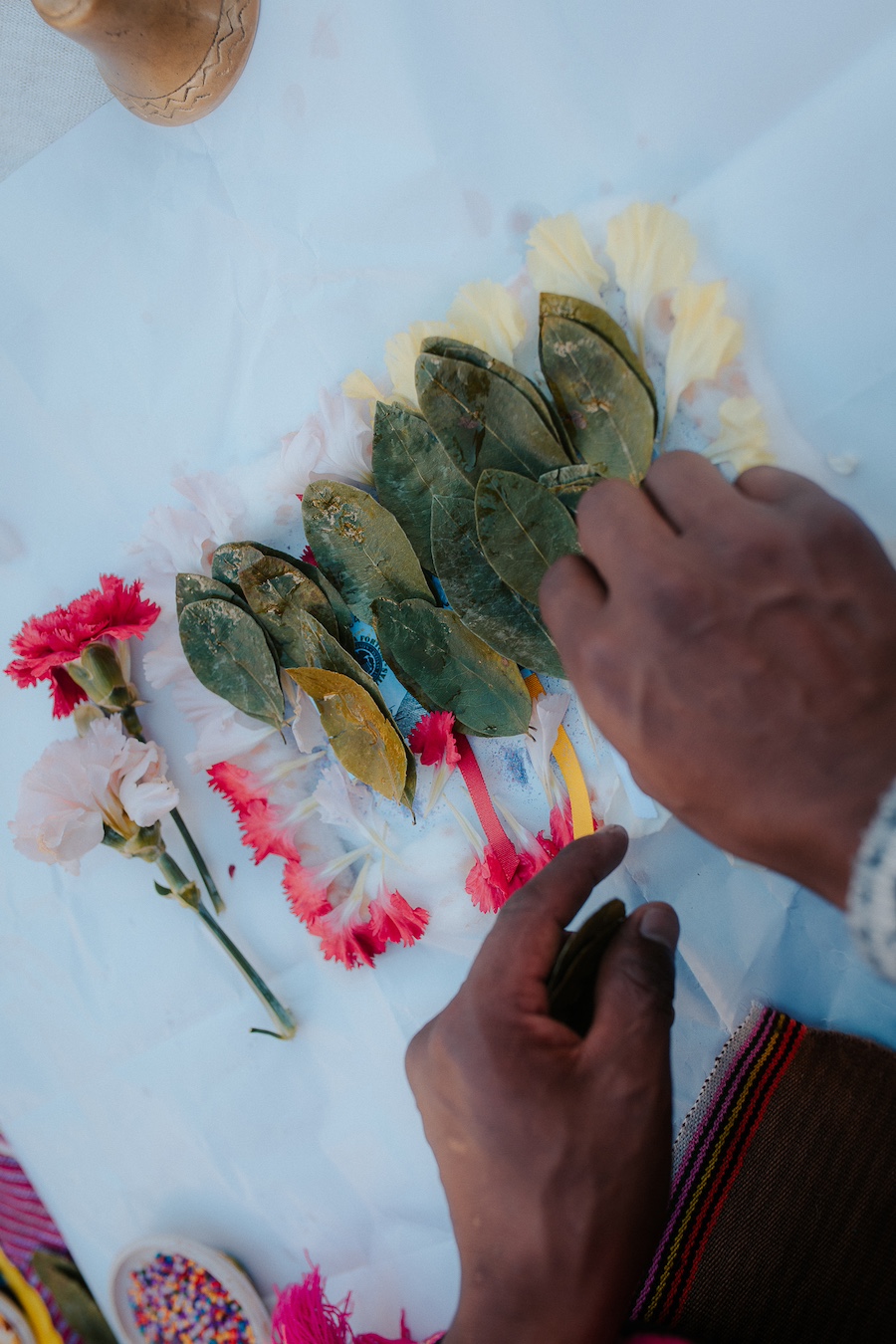
The paqo handles the leaves carefully.
Some may be offered toward the mountains. Others may become part of a reading or later be incorporated into the despacho.
If the paqo speaks Quechua, we translate when translation is needed.
And for a while, two very different lives occupy the same small space.
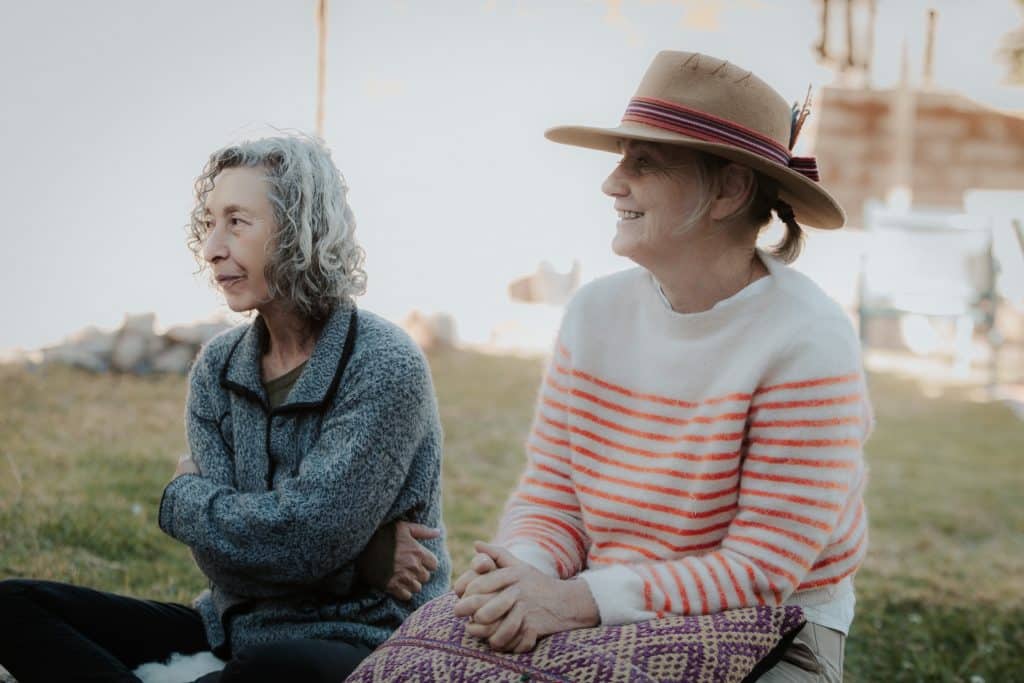
Perhaps one person has arrived from New York, California, Florida or somewhere thousands of miles from the Andes.
The other grew up understanding mountains, earth and reciprocity through an entirely different cultural lens.
Between them lie a few coca leaves.
That is where things become interesting.
Neither person has to convince the other of anything.
They only have to be willing to meet.


What happens during an Andean spiritual cleansing?
There is no single script followed by every Andean practitioner.
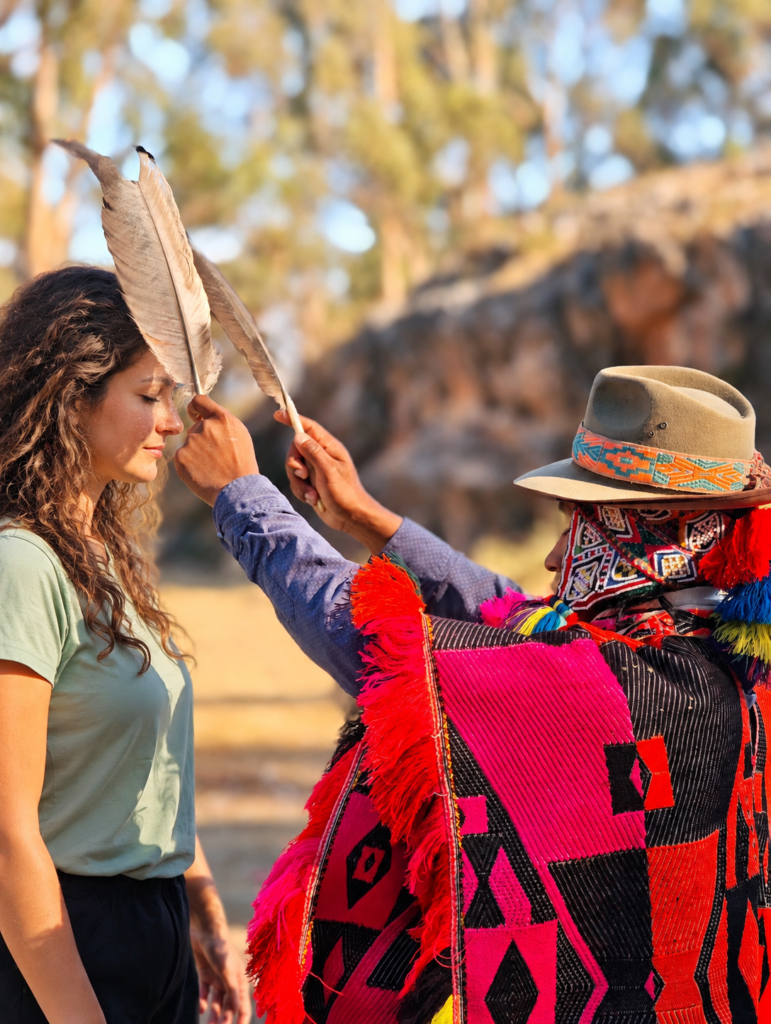
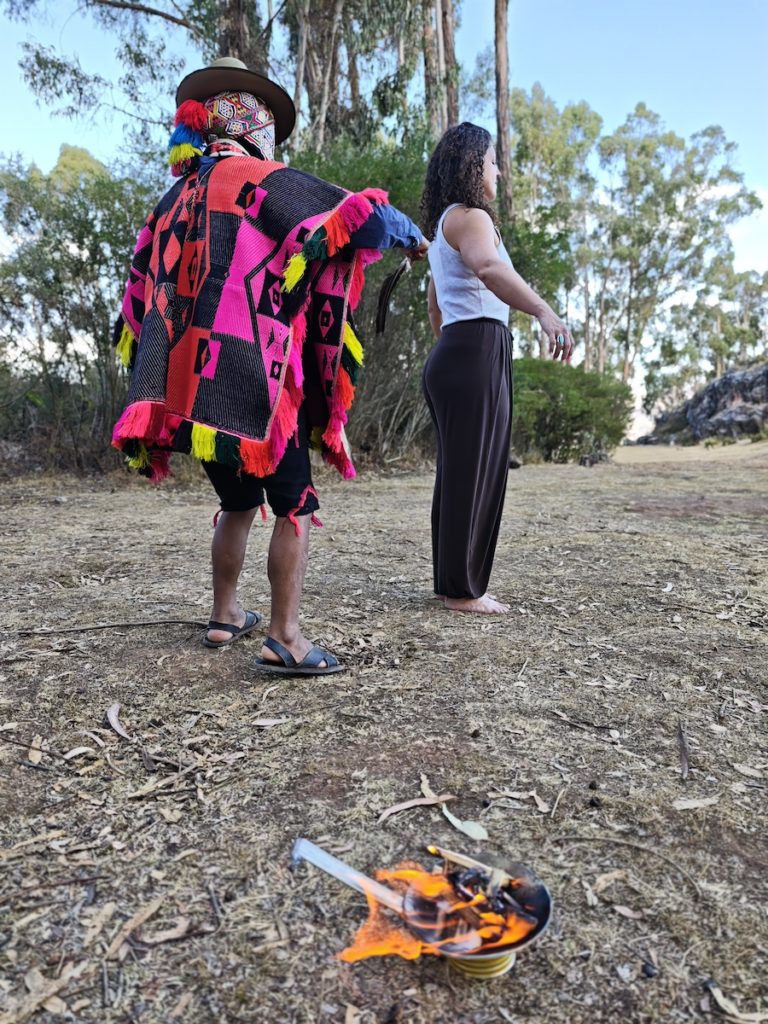
During an Andean spiritual cleansing ceremony, a paqo may use feathers, coca, prayers and other traditional elements according to the knowledge and practice they carry.
The cleansing itself can be surprisingly quiet.
The paqo works around the person.
There may be prayers spoken softly in Quechua. There may be moments of explanation through the translator. And there may be long stretches when nobody needs to say anything.
Travelers sometimes arrive wanting to know exactly what they are supposed to feel.
The answer is: nothing in particular.
There is no required reaction.
You do not have to cry.
You do not have to feel energy moving through your body.
And you certainly don’t have to pretend to experience something because you think that is what a spiritual ceremony in Peru is supposed to look like.
You can simply be there.

The despacho: Pachamama, the Apu and balance
Then comes one of the most beautiful parts of the ceremony.
The despacho.
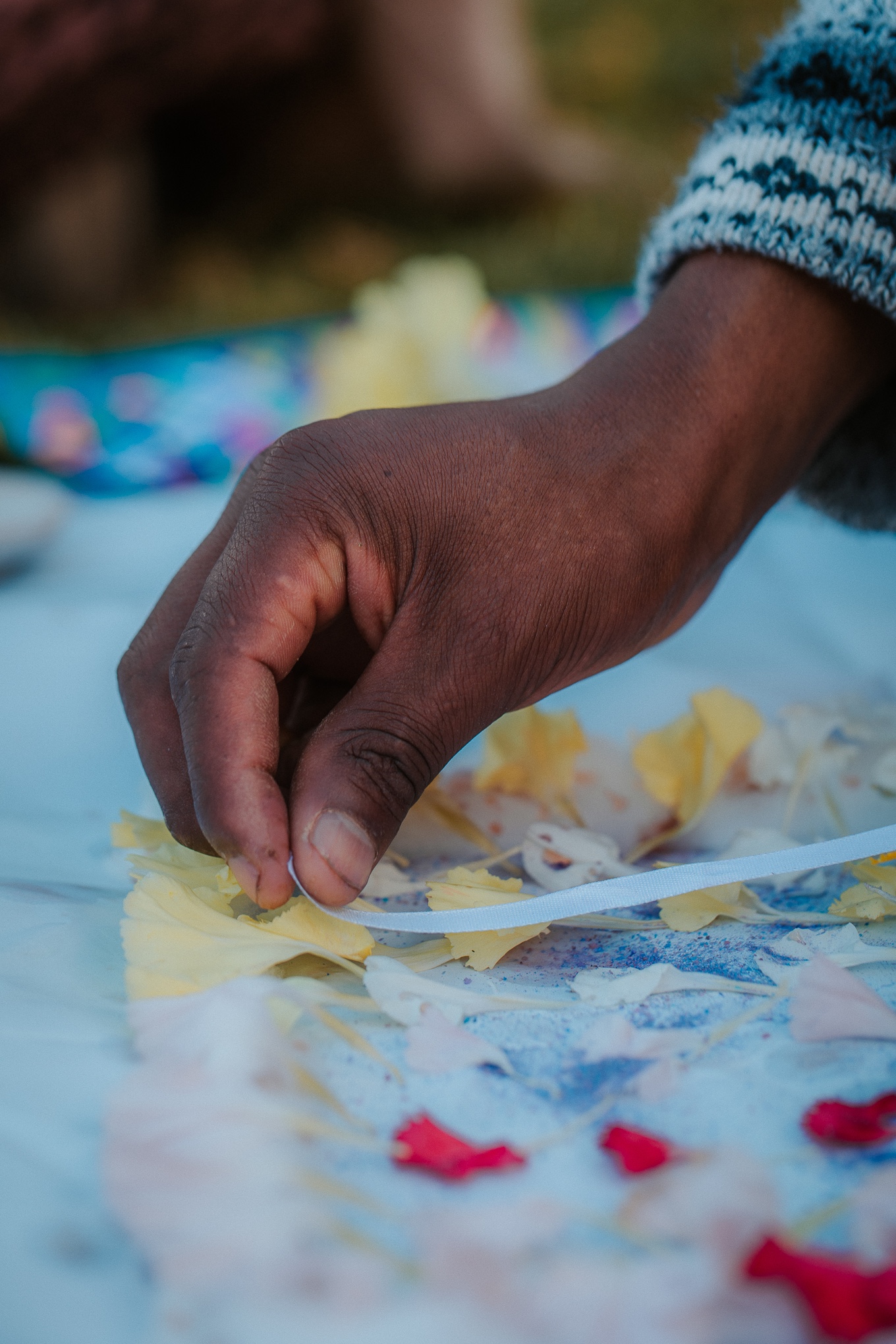
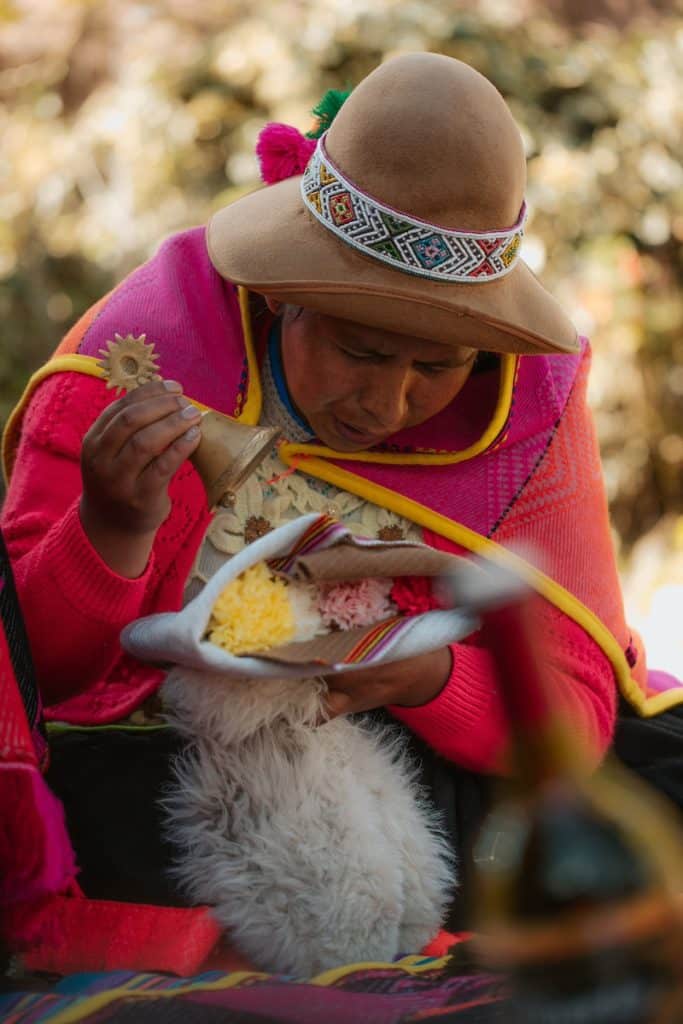
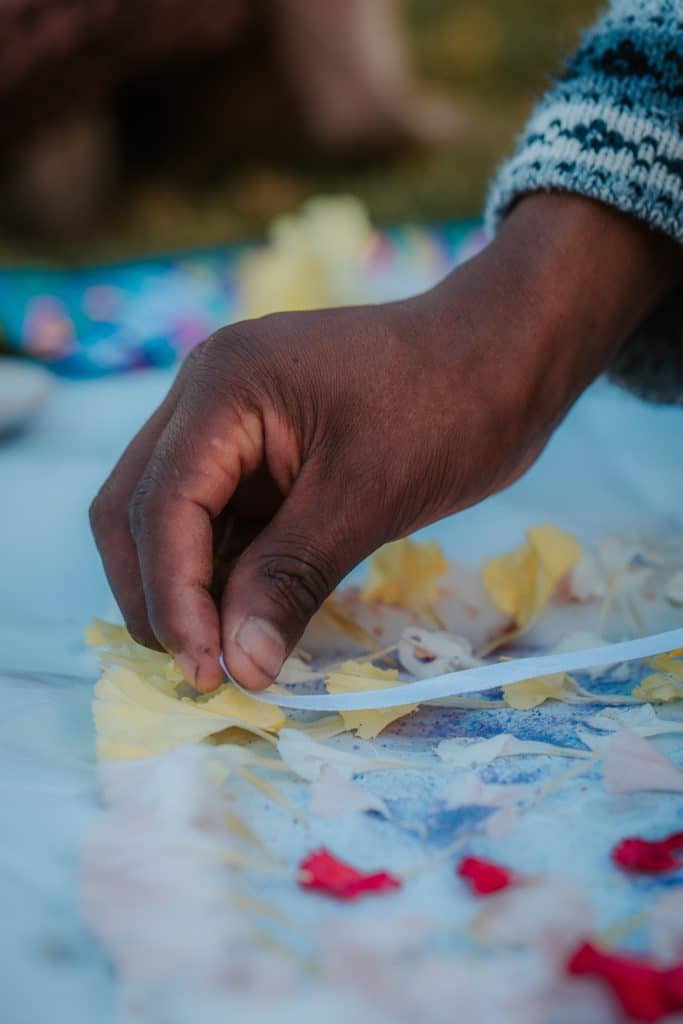
At first glance, it can look like a collection of beautiful natural elements arranged carefully on paper.
But watch the paqo closely and you begin to understand that placement matters.
The Q’ero practitioners we work with explain the despacho through complementary energies.
One part of the offering belongs to Pachamama, associated in the ceremony with feminine energy.
The other acknowledges the Apu, the sacred mountain, associated with masculine energy.
Earth and mountain.
Feminine and masculine.
Different energies, but not enemies.
They belong together.
The despacho becomes a small expression of balance.
And then, little by little, the paqo begins to fill it.
What does abundance actually mean?
A despacho is rarely sparse.
There may be corn.
Grains.
Seeds.
Coca leaves.
Flowers.
And other symbolic elements selected by the paqo for that particular ceremony.
Slowly, the offering becomes abundant.
But this is where the idea becomes particularly interesting.
Because abundance does not necessarily mean having more.
For many of us, particularly in modern Western life, abundance has become tied to accumulation.
More money.
A larger house.
A better job.
More success.
Another destination.
Another experience.
Another photograph.
Sitting in the Andes watching a Q’ero paqo place corn and grains into an offering to Pachamama invites a rather different question:
What if abundance is also recognizing what is already here?
Having food on the table.
Being able to love someone.
Being loved.
Having people around you who genuinely care whether you are well.
A friendship that has survived difficult years.
A family.
A body that carried you up a mountain that morning.
Time.
A fire when the evening becomes cold.
The ability to sit outdoors surrounded by nature and realize that, for the next two hours, there is nowhere else you need to be.
Those things are harder to count.
That doesn’t make them less valuable.
The corn and grains inside the despacho come from the earth. They nourish people. When there is enough, they can be shared.
The offering feels abundant not because its elements are expensive.
It is abundant because the earth has given generously.
And instead of immediately asking for more, the ceremony creates a moment to acknowledge what has already been received.
Abundance is something that moves
This brings us back to ayni.
If Pachamama gives, we give.
If someone offers us care, we can offer care to somebody else.
If the land nourishes us, we respect the land.
If we have love, we can give love.
Seen this way, abundance is not simply something we possess.
Abundance is something that circulates.
Food grown and shared.
Love given and received.
Knowledge passed from grandparents to children.
A stranger treated with kindness.
A meal placed on a table with enough for one more person.
Gratitude returned for what the earth provides.
Suddenly, you are no longer watching somebody arrange corn, coca and flowers on a piece of paper.
You are looking at a small conversation about what it means to have enough.
And what we choose to do with what we have.
And then something happens between people
Some travelers come to an Andean spiritual cleansing in Cusco with a very clear intention.
Others don’t.
Some are going through a transition. Some have lost someone. Some are beginning something new. Some simply became curious after reading about Andean traditions.
And some arrive expecting absolutely nothing.
Perhaps even a little skeptical.
That is perfectly fine.
There is no correct way to arrive.
But something we have witnessed during these ceremonies is that, little by little, people often begin to soften.
Perhaps it is the silence.
Perhaps the mountains.
Perhaps the sound of Quechua.
Perhaps it is being cleansed with feathers while somebody you met only an hour earlier gives you their complete attention.
Or perhaps it is simply unusual, in our very busy lives, to spend two hours without needing to produce anything.
A shoulder relaxes.
Someone who talked constantly at the beginning becomes quiet.
Someone laughs.
And sometimes, unexpectedly, someone begins to cry.
Nobody rushes to stop the tears.
When two people don’t speak the same language
This may be our favorite part.
Our Q’ero practitioners may speak primarily Quechua.
Many of our guests speak English.
We translate because words matter. The traveler deserves to understand what the paqo is explaining, and the paqo deserves to have their words represented as faithfully as possible.
But then there are moments when translation becomes strangely unnecessary.
The paqo smiles.
The traveler smiles back.
Someone laughs.
The other person starts laughing too.
A hand is held.
Someone becomes emotional.
Sometimes both do.
And two people who could not have held a conversation an hour earlier suddenly seem to understand one another perfectly well.
We sometimes call it the language of the heart.
Not because we need to make the experience sound mystical.
But because some human experiences existed long before English, Spanish or Quechua.
Love.
Loss.
Fear.
Joy.
Gratitude.
The need to feel understood.
The relief of finally releasing something you have carried for too long.
You can recognize these things in another human being without sharing a vocabulary.
Sometimes people laugh together.
Sometimes they cry together.
And for a few minutes, nobody needs to translate anything.
An Andean spiritual cleansing in the Sacred Valley
There is another character in this story.
The landscape itself.
Our private Sacred Valley ceremonies take place in Yanahuara, near Urubamba and Ollantaytambo, surrounded by the mountains of the valley.
We particularly love the late afternoon.
At around four o’clock, there may still be warmth in the garden.
Then the light begins to change.
Shadows climb across the mountains.
The temperature drops surprisingly quickly.
A fire is lit.
There may be Andean music playing softly.
The paqo prepares the ceremonial space.
And the valley gradually moves toward evening.
There is no need to create an elaborate stage around it.
The mountains have already done most of the work.
For roughly two hours, there is no archaeological site to reach before closing time.
No train waiting.
No checklist.
No guide announcing that everyone has ten minutes for photographs.
There is simply the ceremony, the paqo, the fire, the mountains and the people who happen to be sitting there together.
No Ayahuasca. No San Pedro.
This is important because online searches for spiritual experiences in Cusco quickly lead travelers toward psychedelic ceremonies.
An Andean spiritual cleansing is something different.
Our ceremonies do not involve Ayahuasca or San Pedro.
There are no psychoactive substances.
You remain present throughout the experience.
For many travelers, particularly those interested in Andean spirituality but not seeking a psychedelic experience, this distinction is important.
The encounter is with a practitioner, a ceremony and a living cultural tradition.
Nothing needs to alter your consciousness for that to be meaningful.
What if you are not spiritual?
Then come curious.
You do not need to believe that an Apu is a living presence in exactly the way the paqo understands it.
You do not have to adopt another person’s worldview.
And you certainly don’t need to return home claiming to have discovered the secrets of the Andes.
Respect is enough.
Perhaps travel is partly about allowing ourselves to sit for a while inside somebody else’s understanding of the world.
Not to appropriate it.
Not necessarily to agree with all of it.
Just to listen.
Because occasionally another way of looking at life makes us reconsider our own.
How to choose an authentic spiritual cleansing in Cusco
Spiritual tourism has grown enormously in Peru.
That makes one question particularly important:
Who is conducting your ceremony?
Ask.
Who is the practitioner?
Where do they come from?
What tradition do they carry?
Is this something they genuinely practice?
Is the ceremony private, or is it performed repeatedly for large groups?
If the practitioner speaks Quechua, will somebody be there to translate their words rather than simply speaking for them?
And be cautious around extravagant promises.
No responsible operator should guarantee that a ceremony will cure an illness, eliminate trauma or transform your life.
We don’t make those promises.
Our role at Pie Experiences is different.
We create the conditions for a respectful encounter with an Andean practitioner and their tradition. We take care of the setting, the details, the translation and the logistics.
Then we give the ceremony room to breathe.
What happens inside you belongs to you.
When the ceremony ends
By now, the Sacred Valley is usually getting cold.
The fire that looked atmospheric at four o’clock has become considerably more practical.
We sit for a while.
There is something warm to drink — perhaps coca or muña tea — and something small to eat.
People begin talking again.
Sometimes they want to discuss everything that happened.
Sometimes they don’t.
Both are fine.
There is no group declaration.
No certificate of spiritual awakening.
No requirement to announce that your life has changed.
Maybe something important happened.
Maybe you simply spent two hours beside a fire listening to a Q’ero paqo while the sun disappeared behind the Andes.
That seems worthwhile too.
The Andes are still happening
Machu Picchu is extraordinary.
So is the Sacred Valley.
So are the great walls of Cusco and the paths that cross these mountains.
But archaeology tells only part of the story.
There are people here today speaking Quechua.
Making offerings to Pachamama.
Acknowledging the Apus.
Reading coca.
Preparing despachos.
Teaching children.
Laughing.
Farming.
Falling in love.
Living ordinary lives alongside traditions that have survived extraordinary changes.
The Andes are not simply something that happened five hundred years ago.
They are happening now.
And sometimes encountering that living world begins in the simplest possible way.
A woven cloth.
A handful of coca leaves.
Corn and grains carefully placed inside an offering.
A fire.
Two people who do not speak the same language.
One of them says something in Quechua.
The other doesn’t understand a word.
They look at each other.
And somehow, they both start laughing.
A little later, perhaps they are crying.
And for a few minutes, nobody needs to translate anything.
Experience an Andean Spiritual Cleansing with Pie Experiences
If you would like to experience the tradition rather than simply read about it, we offer two private Andean spiritual cleansing experiences, each with a different setting and atmosphere.
Andean Spiritual Cleansing in Cusco — 3:00 PM to 5:00 PM
For travelers staying in Cusco, this private afternoon ceremony offers an opportunity to meet an Andean practitioner away from the usual sightseeing rhythm of the city. The experience includes the cleansing ceremony, coca, a despacho offering and English-speaking assistance to help you understand the meaning behind each part of the ritual.
Best for: travelers based in Cusco who want to experience an Andean ceremony without leaving the Cusco area.
→ Explore our Andean Spiritual Cleansing in Cusco
Andean Spiritual Cleansing in the Sacred Valley — 4:00 PM to 6:00 PM
In the Sacred Valley, the experience unfolds in a private garden in Yanahuara, surrounded by mountains near Urubamba and Ollantaytambo. The ceremony begins in the late-afternoon light and gradually moves toward sunset, with fire, Andean music and a warm infusion at the end.
It is quieter, more intimate and shaped as much by the landscape as by the ceremony itself.
Best for: travelers staying in the Sacred Valley, Urubamba or Ollantaytambo — or those who want a more immersive setting surrounded by the Andes.
→ Explore our Sacred Valley Andean Spiritual Cleansing
FAQ: Andean Spiritual Cleansing in Cusco
What is an Andean spiritual cleansing?
An Andean spiritual cleansing is a traditional ceremony that may include practices such as cleansing with feathers, coca leaf reading, prayer and an offering to Pachamama. The exact ceremony varies according to the practitioner and their tradition.
What is a Q’ero paqo?
A paqo is an Andean spiritual practitioner. Q’ero paqos carry ceremonial knowledge connected with their communities, the natural world, Pachamama, the Apus and traditions of reciprocity.
What is a despacho ceremony?
A despacho is a ceremonial offering prepared with elements that may include coca leaves, corn, grains, flowers and other symbolic ingredients. In the ceremonies of the Q’ero practitioners we work with, the offering recognizes complementary energies associated with Pachamama and the Apu and expresses gratitude, balance, reciprocity and abundance.
Does an Andean spiritual cleansing include Ayahuasca or San Pedro?
Our cleansing ceremonies do not. There are no psychoactive substances involved, and guests remain fully present throughout the experience.
Do I need to be spiritual to participate?
No. You don’t need to follow a particular religion or spiritual practice. Curiosity and respect for the tradition are enough.
Can I have an Andean spiritual cleansing in the Sacred Valley?
Yes. Pie Experiences offers private ceremonies in the Sacred Valley near Urubamba and Ollantaytambo, as well as experiences in the Cusco area.
Is English translation available?
Yes. English-speaking assistance is provided so guests can understand the paqo’s explanations and the meaning behind the ceremony while allowing the practitioner to communicate in their own language.
What time does the Andean spiritual cleansing take place?
In Cusco, the ceremony is held from 3:00 PM to 5:00 PM. In the Sacred Valley, our late-afternoon ceremony takes place from 4:00 PM to 6:00 PM, allowing guests to experience the changing light and atmosphere of the valley as evening approaches.