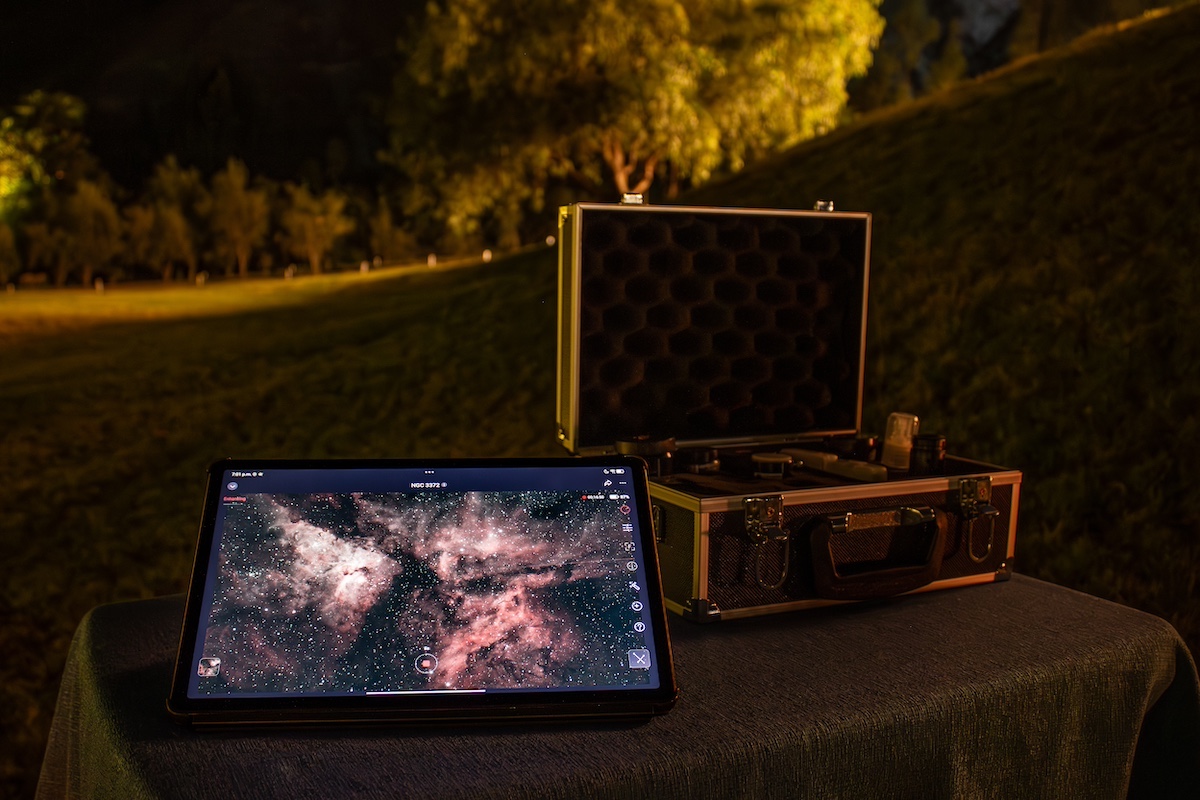
If you are looking for the best Cusco Stargazing Tour, the Sacred Valley of the Incas offers some of the darkest skies and most spectacular views of the Milky Way in Peru. Located just outside Cusco, the Sacred Valley combines high-altitude observation points, minimal light pollution, ancient Inca astronomy, and authentic cultural experiences that go far beyond a typical night tour.
A Sacred Valley Stargazing Tour allows travelers to observe constellations, planets, and the Milky Way while learning how the Incas interpreted the night sky centuries before modern telescopes existed. For those seeking a deeper connection with Andean culture, some experiences can also include a traditional Q’ero energy cleansing ceremony, offering a unique combination of astronomy, spirituality, and local traditions.
Whether you are a photographer, a curious traveler, or simply someone searching for unforgettable things to do in Cusco at night, stargazing in the Sacred Valley offers one of the most memorable experiences in Peru.
This Cusco Stargazing Tour is ideal for travelers staying in Cusco, Urubamba, or Ollantaytambo.
Most travelers come to Cusco with a checklist.
Machu Picchu. The Sacred Valley. Maybe Rainbow Mountain if they are feeling ambitious.
Very few arrive thinking about the night sky.
And that is a mistake.
Because when the crowds disappear, when the buses stop moving and the souvenir markets close for the day, something remarkable happens above the Andes.
The sky comes alive.
A Cusco Stargazing Tour is one of the most overlooked experiences in Peru. While thousands of visitors spend their evenings inside hotels or restaurants, a few curious travelers step outside and discover what the Incas already knew centuries ago: the heavens are not just something to look at.
They are part of the story.
For photographers, a Cusco Stargazing Tour offers one of the best chances to capture the Milky Way in Peru.

Why the Sacred Valley Offers Better Stargazing Than Cusco City
Let’s be honest.
Cusco is beautiful, but it is still a city.
Streetlights, traffic, hotels, restaurants, and growing urban development create light pollution that limits what you can see once darkness falls.
The Sacred Valley is different.
Located between towering Andean mountains and traditional villages, the valley offers darker skies, cleaner air, and a sense of silence that is becoming increasingly rare in modern travel.
Just a short drive from Cusco, the Milky Way begins to reveal itself.
Not as a faint line.
As a river of stars stretching across the sky.
On clear nights, visitors can observe thousands of stars, bright planets, star clusters, and celestial formations that remain invisible from most major cities around the world.
This is why many travelers searching for a Cusco Stargazing Tour eventually discover that the best viewing locations are actually found in the Sacred Valley.
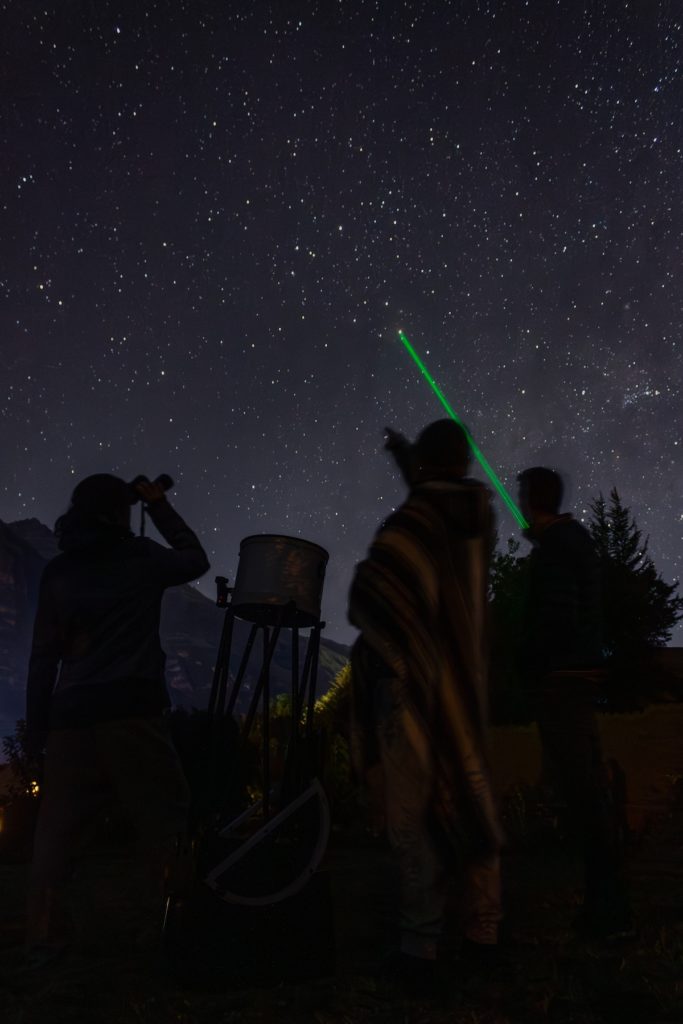


The Sky That Guided an Empire
Long before telescopes existed, the Incas were already watching the heavens.
Unlike many ancient civilizations that connected stars into constellations, the Incas also looked into the dark spaces of the Milky Way.
They identified animals hidden in the shadows of the galaxy.
A llama.
A fox.
A serpent.
A toad.
These celestial beings helped guide agricultural cycles, ceremonial calendars, and spiritual traditions throughout the Andes.
For the Incas, astronomy was not a hobby.
It was survival.
The movements of the sky helped determine when to plant, when to harvest, and when to perform ceremonies honoring the mountains, rivers, and Pachamama.
Today, during a Sacred Valley Stargazing Tour, visitors can still learn about these ancient interpretations while standing beneath the same sky observed centuries ago.
The stars have not changed.
Only the way we look at them has.
A Different Kind of Luxury
Luxury is often misunderstood.
Many people imagine marble bathrooms, infinity pools, or champagne served at sunset.
But there is another type of luxury.
Silence.
Space.
Darkness.
The ability to stand beneath a sky untouched by artificial light and simply be present.
The Sacred Valley offers exactly that.
As night falls, temperatures cool, the mountains become silhouettes, and the stars slowly begin to appear one by one.
There are no crowds.
No queues.
No loudspeakers.
Just the Andes and the universe above.
In a world where nearly every experience is designed to be consumed quickly, stargazing forces you to slow down.
And that may be its greatest gift.
Seeing the Milky Way in Peru
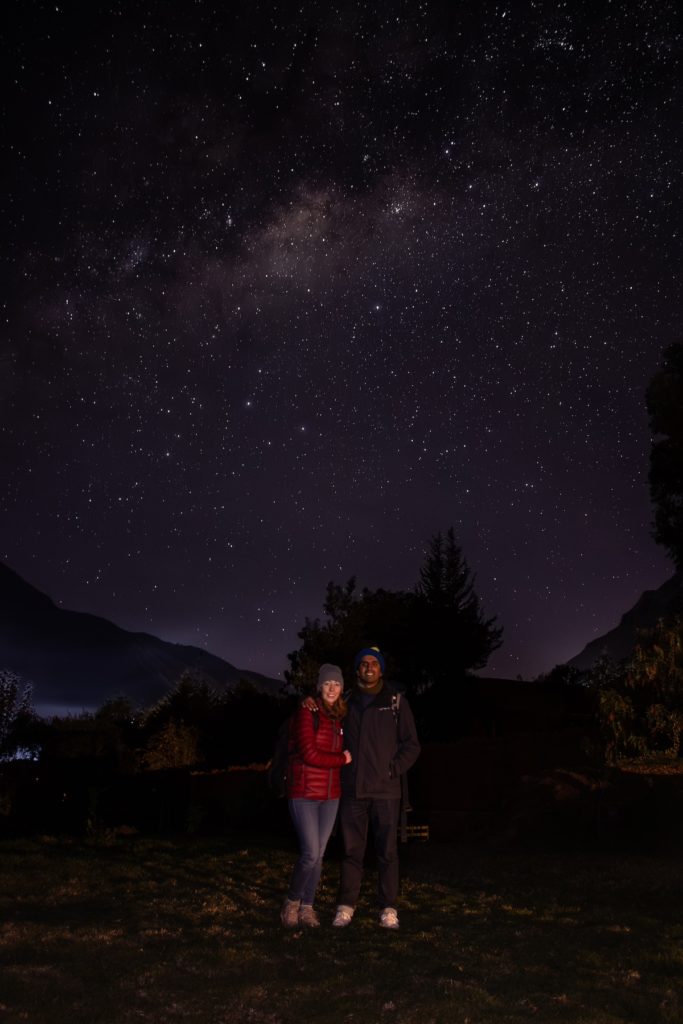
One of the biggest highlights of any Cusco Stargazing Tour is the opportunity to see the Milky Way with remarkable clarity.
Depending on the season and weather conditions, visitors can witness one of the brightest sections of our galaxy arching across the night sky.
Photographers travel thousands of miles searching for locations like this.
The combination of altitude, dry air, and low light pollution creates ideal viewing conditions.
Even travelers with no interest in astronomy often find themselves staring upward for much longer than expected.
Because seeing the Milky Way with your own eyes is different from seeing a photograph.
It feels bigger.
More personal.
Almost impossible to explain until you are standing there.
If you are planning a Peru itinerary, adding a Cusco Stargazing Tour can make your journey feel more complete.
More Than Astronomy
What makes a Sacred Valley Stargazing Tour special is that it goes beyond science.
Yes, you learn about stars.
Yes, you learn about planets and constellations.
But there is also something deeply human about gathering around a fire, drinking something warm, sharing stories, and looking at a sky that has inspired farmers, travelers, poets, healers, and dreamers for thousands of years.
Some visitors come for photography.
Others come for curiosity.
Many leave with something unexpected.
Perspective.
When you spend your days worrying about deadlines, emails, business plans, and endless notifications, the universe can feel surprisingly small.
Then you stand beneath a sky filled with billions of stars.
And suddenly your problems become lighter.
Not because they disappear.
Because they find their proper scale.
Add an Andean Energy Cleansing Ceremony with a Q’ero Shaman
For travelers who feel drawn to something deeper, the evening can begin with an Andean Energy Cleansing Ceremony led by a Q’ero shaman.
The Q’ero people live in remote communities high in the Andes, above 4,000 meters, where ancient traditions have been preserved for generations. They are often described as guardians of the Inca spiritual tradition, not because they perform for travelers, but because their way of life remains deeply connected to the mountains, the earth, and the cosmos.
For the Q’ero, the universe is alive.
The mountains are not simply mountains. They are Apus, living spirits that protect and guide the communities below.
The earth is Pachamama, the great mother who nourishes all life.
The stars are not distant decorations in the sky. They are part of an interconnected world where everything carries energy, memory, and meaning.
A cleansing ceremony is not about superstition or spectacle.
It is about balance.
It is an act of reciprocity between human beings, nature, and the unseen forces that sustain life.
Held on our private property near Ollantaytambo, in the heart of the Sacred Valley, this ceremony offers a quiet and respectful way to experience a living Andean tradition.
As night settles over the mountains, guests gather beside a bonfire with a glass of warm mulled wine. Some share stories about the stars. Others speak about their travels, dreams, losses, transitions, or simply the strange roads that brought them to Peru.
There is no pressure to share.
Some people talk.
Others simply listen.
Your host, Katherine, welcomes guests as she would welcome friends into her home: with warmth, honesty, and space for each person to experience the night in their own way.
Above, the Milky Way stretches across the sky just as it did for the Incas and the Q’ero long before modern cities existed.
Because in the Sacred Valley, the night sky is not just something you observe.
It is something you experience.

MG 5599 1
When Is the Best Time for Stargazing in Cusco?
The dry season, from April through October, generally offers the clearest skies.
June, July, and August are especially good months for stargazing in Cusco and the Sacred Valley because the weather tends to be more stable and visibility is often excellent.
That said, stargazing can be enjoyed during much of the year.
The key is choosing a clear night, avoiding heavy cloud cover, and finding a location away from urban light.
The Sacred Valley, especially areas near Ollantaytambo, Yanahuara, Urubamba, and surrounding rural zones, offers excellent conditions for night sky observation.
Why Add a Stargazing Experience to Your Peru Itinerary?
Most Peru itineraries focus on what happens during the day.
Ancient ruins.
Mountain hikes.
Colorful markets.
Train rides.
But the Andes do not stop being magical when the sun goes down.
In many ways, they become even more extraordinary.
A Cusco Stargazing Tour offers something different from every other experience in Peru.
It requires no physical effort.
No altitude challenge.
No long hike.
Just curiosity.
And a willingness to look up.
After days of temples, terraces, and stone paths, the night sky gives travelers another way to understand the Andes.
Not through facts alone.
But through silence.
Through fire.
Through stories.
Through that rare feeling of standing somewhere ancient and realizing that the universe has been above you all along.
Because long after travelers forget train schedules, hotel rooms, and restaurant reservations, many remember a simple moment.
Standing beneath the Sacred Valley sky.
Watching the Milky Way stretch across the Andes.
Feeling small, but not insignificant.
And understanding that some of the most unforgettable experiences in Peru happen after dark.
Frequently Asked Questions About Stargazing in Cusco
Is stargazing in Cusco worth it?
Absolutely. While most visitors focus on Machu Picchu and daytime excursions, the night sky above the Andes offers an entirely different perspective. Thanks to its high altitude and clear atmosphere, Cusco and the Sacred Valley provide excellent conditions for observing stars, planets, and the Milky Way.
Is stargazing better in Cusco or the Sacred Valley?
The Sacred Valley generally offers better conditions because there is significantly less light pollution than in Cusco city. Areas near Ollantaytambo, Yanahuara, and rural parts of the valley provide darker skies and a more immersive experience.
Can you see the Milky Way in the Sacred Valley?
Yes. During clear nights, especially in the dry season from April to October, visitors can enjoy spectacular views of the Milky Way stretching across the Andean sky.
What is the best month for a Cusco Stargazing Tour?
The best months are typically May through September, when rainfall is minimal and skies tend to be clearer. June, July, and August often provide exceptional visibility.
Do I need a telescope to enjoy stargazing in Peru?
Not at all. One of the advantages of the Sacred Valley is that many celestial features are visible with the naked eye. A telescope enhances the experience, but it is not necessary to appreciate the beauty of the Andean night sky.
What should I wear for a Stargazing Tour in Cusco?
Even during the dry season, temperatures can drop significantly after sunset. We recommend dressing in layers and bringing a warm jacket, hat, gloves, and comfortable closed-toe shoes.
Is the experience suitable for children?
Yes. Stargazing is a family-friendly activity and children often enjoy learning about Inca astronomy, constellations, and the stories behind the night sky.
What happens if the sky is cloudy?
Weather in the Andes can be unpredictable. If visibility is limited, the evening can still include storytelling, discussions about Inca astronomy, cultural traditions, and time around the bonfire. Some operators may also offer alternative dates depending on conditions.
What is a Q’ero Energy Cleansing Ceremony?
A Q’ero Energy Cleansing Ceremony is a traditional Andean ritual led by a member of the Q’ero communities, often regarded as guardians of ancient Andean spiritual traditions. The ceremony focuses on restoring balance, gratitude, and connection with Pachamama (Mother Earth) and the Apus (mountain spirits).
How far is the Stargazing Experience from Ollantaytambo?
Our private property is located just a short drive from Ollantaytambo in the Sacred Valley, making it an easy evening excursion for travelers staying in Ollantaytambo, Urubamba, or nearby areas.