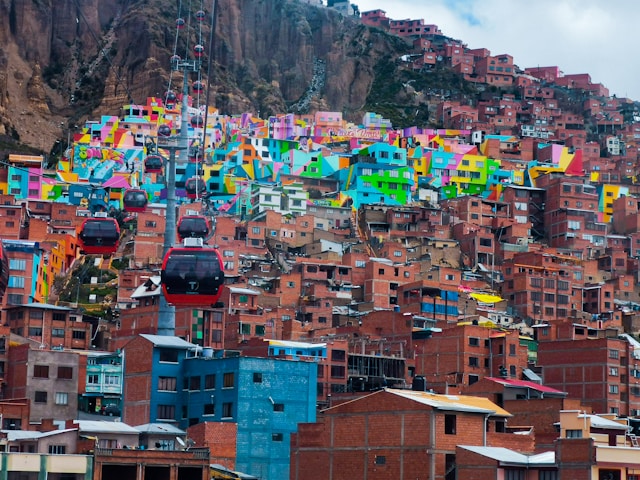
Bolivia does not promise you an easy road.
It never has.
The country has lived with strikes, roadblocks, protests, and political drama for years. And still, travelers come. Because behind the chaos, there is a country of impossible landscapes, generous people, brutal altitude, and beauty that stays with you long after the dust leaves your boots.
If you are planning a trip and asking yourself, “Is it safe to visit Uyuni in 2025 -2026?”, the honest answer is:
Yes, Uyuni can still be visited — but your route matters more than ever.
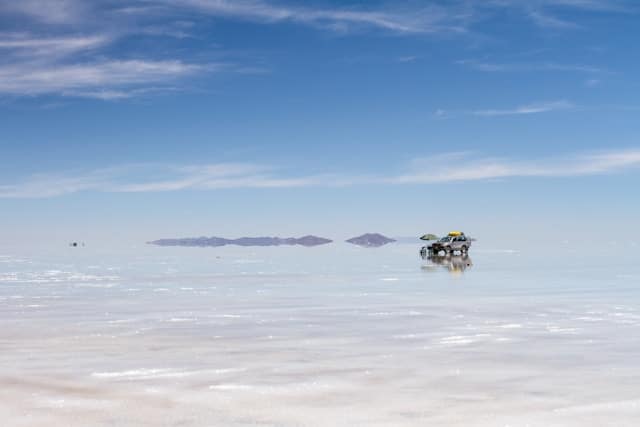
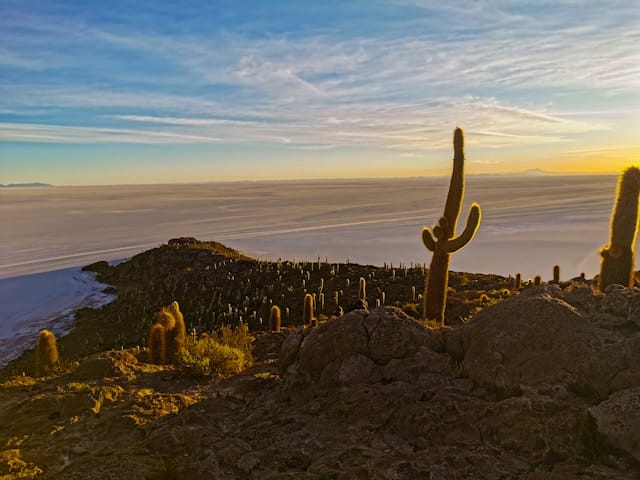
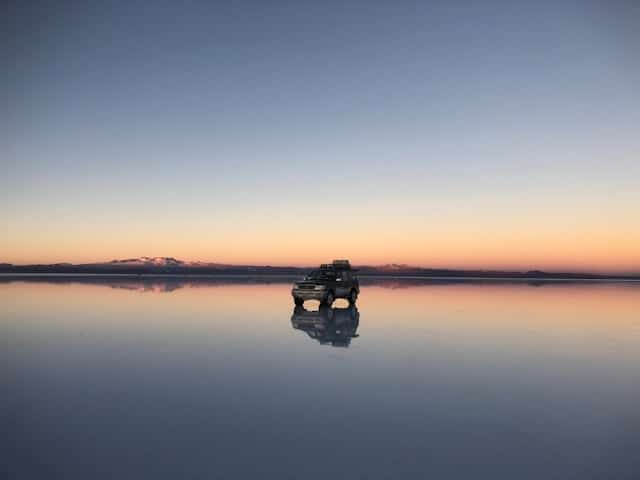
The Salar de Uyuni is still there. The salt flats are still impossibly white. The flamingos are still standing in red, green, and mineral-rich lagoons. The sunsets still look like another planet. The stars still own the night.
But Bolivia’s current political and social situation means travelers should plan carefully, stay flexible, and avoid improvising long overland routes through affected areas.
Quick Answer for Travelers
Uyuni Salt Flats can still be visited in 2026, but travelers should avoid long road routes through affected parts of Bolivia. The most practical route is often from San Pedro de Atacama, Chile, entering Bolivia for the tour and returning to Chile afterward. Uyuni tours are operating, but travelers should use travel insurance, avoid tight connections and monitor roadblock updates before traveling.


What Is Happening in Bolivia in 2025?
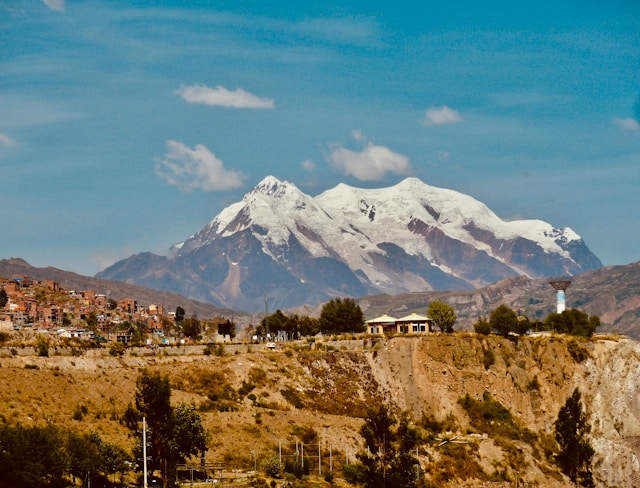
Bolivia is going through a tense political and social period, with protests and roadblocks affecting several parts of the country.
The unrest is connected to political change, economic pressure, and social frustration. President Rodrigo Paz came to power after almost two decades of dominance by the MAS movement, and his government has faced strong opposition over austerity measures, rising living costs, fuel pressure, and broader dissatisfaction with the country’s economic direction. Reuters has reported that demonstrations grew from strikes in May 2025 into a wider movement involving labor unions, miners, transport workers, rural groups, and supporters of former president Evo Morales.
By early June 2025, roadblocks and protests were still affecting key areas, including La Paz and El Alto, while the government pledged to reopen roads and restore access to essential supplies and medical care. (Reuters)
This is not just a minor inconvenience. Roadblocks in Bolivia can affect buses, private transfers, food supplies, fuel availability, and access to airports or cities. The UK government warns travelers not to cross roadblocks or approach crowds, and the U.S. Department of State advises travelers to be ready to change plans if there are roadblocks, demonstrations, protests, strikes, or road closures.
So yes, Bolivia is complicated right now.
But that does not mean Uyuni is cancelled.
So yes, Bolivia is complicated right now.
But that does not mean Uyuni is cancelled.
Bolivia Has Always Required Flexibility
To understand Bolivia, you need to understand one thing: roadblocks and strikes are part of the country’s travel reality.
Over the last several years, Bolivia has regularly experienced protests, transport strikes, social movements, fuel shortages, and temporary road closures. For travelers, this can be frustrating. For locals, it is part of a larger political and social landscape that has shaped the country for a long time.
This has never meant that Bolivia should not be visited.
It means Bolivia should be visited with respect, patience, and flexibility.
Bolivia is not a destination where every road always runs on schedule. It is not a country where you should plan tight connections, assume every route will be open, or leave no room for changes. But it is also one of the most extraordinary places in South America.
The key is not to avoid Bolivia completely.
The key is to choose the right route, keep your plans flexible, and travel with updated local information.
Are Uyuni Tours Still Operating?
Yes. Based on local operations, Uyuni tours are still operating normally.
The Salar de Uyuni region is not the same as La Paz, Copacabana, or other routes that may be more exposed to roadblocks. The main issue for travelers is not usually the Salt Flats themselves, but how they enter and leave Bolivia.
That distinction matters.
You can still visit the salt flats, the lagoons, the desert, the geysers, and the high-altitude landscapes. But in 2026, it is smarter to avoid long internal routes through Bolivia whenever possible.
Instead of asking only, “Is Uyuni safe in 2025?”, the better question is:
“What is the smartest way to visit Uyuni in 2025?”

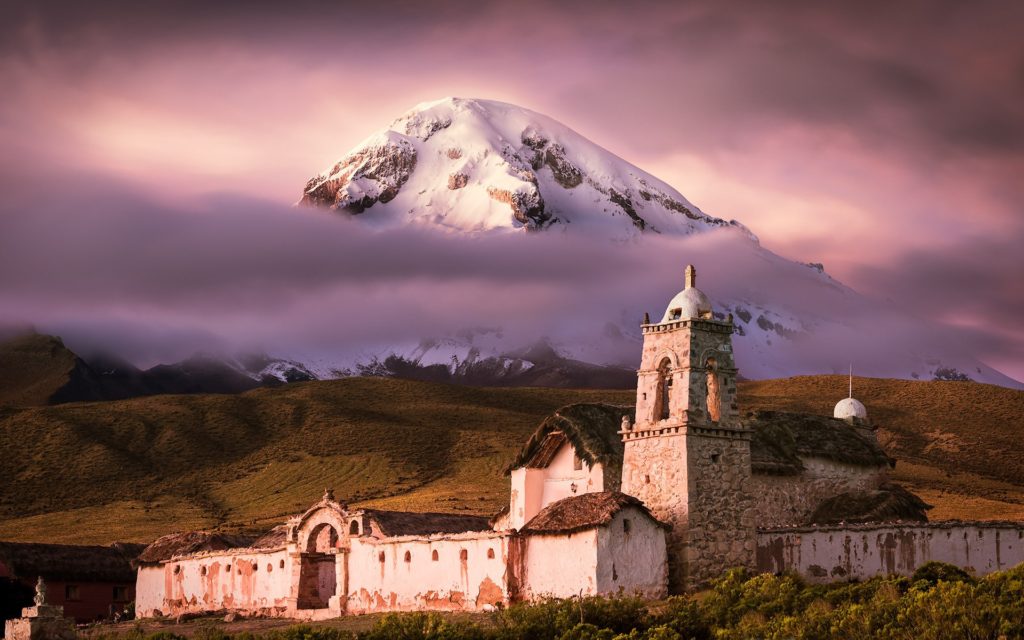
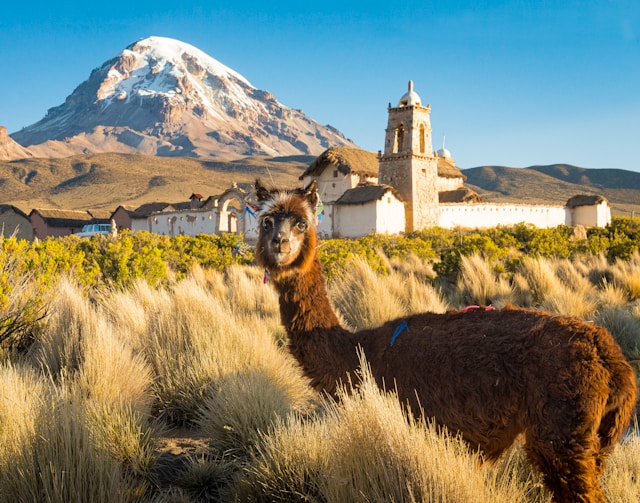
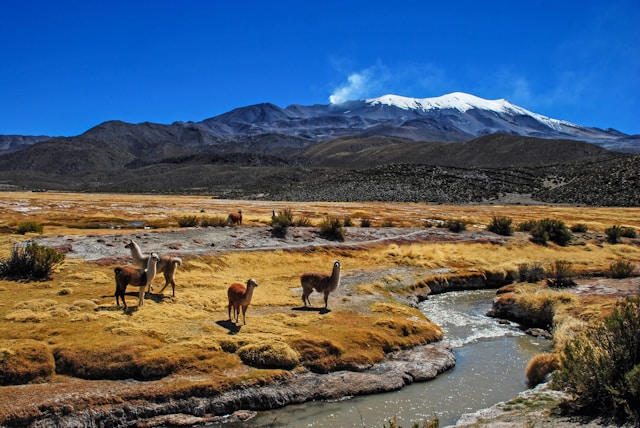



Why Are Uyuni Tours Still Operating Normally?
Bolivia is a large and geographically complex country. A roadblock in La Paz, Copacabana, Cochabamba, or another region does not automatically stop operations in Uyuni.
Most disruptions are concentrated in specific cities, roads, and political pressure points. Uyuni, by contrast, is a remote tourism hub in the southwest of Bolivia, close to the Salt Flats and the high-altitude desert route that connects with the Chilean border.
That location matters.
Uyuni tours operate mainly in the Salar de Uyuni, the Eduardo Avaroa Reserve, the lagoon region, and the desert route toward Hito Cajón / San Pedro de Atacama. These areas are far from many of the main protest centers and are not usually the same routes used for urban demonstrations or political roadblocks.
In simple terms:
The problem in Bolivia is not the Salt Flats. The problem is usually the road you choose to reach or leave them.
This is why tours that start and end in San Pedro de Atacama are currently one of the best options. Travelers enter Bolivia through a tourism border route, visit the main natural attractions, and return to Chile without depending on long internal highways through the most affected parts of the country.
Of course, conditions can always change. This is Bolivia, and flexibility is essential. Weather, border controls, protests, or local decisions can still affect logistics. But as long as the southwest route remains open, Uyuni tours can continue operating normally even when other parts of the country are facing roadblocks.
That is why local monitoring is so important. A good operator is not just selling a tour; they are checking routes, speaking with drivers, confirming border conditions, and adjusting plans if needed.
What About Borders and Overland Routes?
Travelers should also be careful with overland border crossings.
Routes through Copacabana and Desaguadero, often used by travelers coming from or going to Peru, may also be affected by roadblocks or transport disruptions. During periods of unrest, overland travel between Peru and Bolivia can become unpredictable.
For this reason, if you need to move between major cities in Bolivia, we recommend considering flights instead of long-distance road travel whenever possible.
Flying can reduce exposure to highway roadblocks and make your itinerary more manageable, especially if you need to connect between places such as La Paz, Santa Cruz, Sucre, Cochabamba, or Uyuni.
However, even when flying, you still need flexibility. Airports may operate, but road access to airports can still be affected by traffic, demonstrations, or temporary blockades. If you are flying from La Paz, plan to arrive at the airport at least 4 hours before departure, avoid tight connections, and check local conditions before leaving your hotel.
In short: during unstable periods, air travel is usually more reliable than long-distance road travel inside Bolivia, but you still need extra time and a backup plan.
The Smartest Route: San Pedro de Atacama to Uyuni and Back
Right now, one of the most practical ways to visit Uyuni is:
San Pedro de Atacama, Chile → Uyuni Salt Flats → San Pedro de Atacama, Chile
This route allows travelers to start in northern Chile, cross into Bolivia for the tour, visit the Eduardo Avaroa Reserve, colorful lagoons, geysers, flamingos, desert landscapes, and the Salar de Uyuni, and then return to Chile.
Why does this route make sense?
Because it reduces your dependence on long overland routes through Bolivia’s most affected areas.
Instead of traveling through La Paz, Copacabana, Oruro, Potosí, or other potentially disrupted corridors, you enter Bolivia for the experience itself and return through Chile afterward.
It is not about fear.
It is about smart routing.
Alternative Option: 3-Day Uyuni Tour + Extra Night in Uyuni + Bus to Calama
Another practical option is to take a 3-day Uyuni tour, spend one extra night in Uyuni after the tour, and then take a local morning bus from Uyuni to Calama, Chile.
This option works especially well for travelers who want to continue into Chile after visiting Bolivia.
The local bus usually leaves Uyuni very early, around 5:00 a.m., and arrives in Calama around 3:00 p.m., depending on road, weather, and border conditions.
It is not glamorous.
It is not luxury.
But sometimes, in South America, the best plan is the one that actually works.
If you choose this option, avoid booking a same-day international flight from Calama. Give yourself flexibility. Border crossings, weather, and local transport can change.
Travel Insurance Is Essential in 2025
If you are planning to visit Bolivia or Uyuni in 2026, we strongly recommend traveling with a good travel insurance policy.
During periods of roadblocks, protests, weather changes, border delays, or flight disruptions, having travel insurance can help protect your trip investment. Depending on your policy, insurance may help you recover costs related to cancellations, delays, missed connections, medical emergencies, or unexpected itinerary changes.
This is especially important in Bolivia, where travel conditions can change quickly and some services may be non-refundable once confirmed with local suppliers.
Before purchasing a policy, check carefully that it includes:
- Trip cancellation or interruption coverage
- Travel delay or missed connection coverage
- Medical assistance and emergency evacuation
- Coverage for political unrest, strikes, or civil disruption, if available
- High-altitude travel coverage, when applicable
Travel insurance will not prevent disruptions, but it can give you financial protection and peace of mind if your plans need to change.
Practical Tips for Visiting Uyuni in 2025
If you are planning to visit Uyuni in 2026, keep these recommendations in mind:
- Choose routes that avoid the most affected areas when possible.
- Consider starting and ending in San Pedro de Atacama.
- Use flights instead of long road transfers inside Bolivia when possible.
- Be careful with overland routes through Copacabana or Desaguadero.
- Keep at least one buffer day before important flights.
- Avoid tight connections.
- Travel with insurance that covers cancellations, delays, medical assistance, and unexpected itinerary changes.
- Do not try to cross roadblocks.
- Monitor official travel advisories before and during your trip.
- Travel with an operator that has local contacts on the ground.
- Bring very warm clothes, especially for nights in the Altiplano.
- Be prepared for altitude.
- Stay flexible if routes, timing, or logistics change.
Bolivia rewards travelers who can adapt.
It punishes travelers who plan every hour like a spreadsheet and expect the Andes to cooperate.
Final Answer: Is It Safe to Visit Uyuni in 2025?
Yes — it can be safe to visit Uyuni in 2026, but only if you choose your route carefully.
Uyuni is still operating. The salt flats are still one of the most surreal places on Earth. The landscapes are still worth the cold, the altitude, the dust, and the long drives.
But Bolivia is unpredictable right now.
This is not the year to travel blindly. It is the year to travel informed.
The smartest travelers will be the ones who stay flexible, avoid affected routes, choose the right travel insurance, and work with operators who are watching the situation on the ground.
So yes: keep traveling. Keep dreaming about Uyuni. Keep chasing that white horizon where the sky and salt become one.
Just do it carefully.
At Pie Experiences, we are monitoring the situation with our local team and recommending the most practical routes for travelers who want to visit Uyuni safely and smoothly.
For now, our strongest recommendation is simple:
Start in San Pedro de Atacama. Visit Uyuni. Return to San Pedro de Atacama.
You can explore our recommended Uyuni tours from San Pedro de Atacama here:
San Pedro de Atacama to Uyuni Comfort Tour:
https://pie-experiences.com/tour/san-pedro-to-uyuni-tour/
3-Day Atacama to Uyuni Adventure:
https://pie-experiences.com/tour/3-day-atacama-to-uyuni-adventure/
The salt flats are still there.
You just need the right way in — and the right way out.
Uyuni is not cancelled. You just need a smarter plan.

FAQ: Visiting Uyuni Salt Flats in Bolivia in 2025
Is it safe to visit Uyuni Salt Flats in Bolivia in 2025?
Yes, it can be safe to visit the Uyuni Salt Flats in Bolivia in 2026, but travelers should choose their route carefully. Uyuni tours are operating, but some roads in Bolivia may be affected by protests, strikes or roadblocks. The safest approach is to avoid long overland routes through affected areas and travel with flexibility.
Are Uyuni Salt Flats tours operating in 2025- 2026?
Yes, Uyuni Salt Flats tours are operating in 2026. The Salt Flats, Eduardo Avaroa Reserve, colorful lagoons and desert routes are generally far from the main protest centers. The main concern is not the Salar de Uyuni itself, but the road used to enter or leave the region.
What is the safest route to visit Uyuni Salt Flats in 2025 -2026?
One of the safest and most practical routes to visit Uyuni Salt Flats in 2026 is from San Pedro de Atacama, Chile. Travelers can start in San Pedro de Atacama, enter Bolivia for the Uyuni tour, visit the Salt Flats and high-altitude lagoons, and return to San Pedro de Atacama.
Is San Pedro de Atacama to Uyuni a good route in 2025- 2026?
Yes. The San Pedro de Atacama to Uyuni route is one of the best options in 2026 because it helps travelers avoid long internal road journeys through Bolivia. It is especially useful during periods of roadblocks or social unrest in areas such as La Paz, Copacabana or Desaguadero.
Can I visit Uyuni from Chile in 2026?
Yes, you can visit Uyuni from Chile in 2026. The most common route is from San Pedro de Atacama in northern Chile to the Uyuni Salt Flats in Bolivia. Many travelers choose this route because it is practical, scenic and avoids many of the more unpredictable overland routes inside Bolivia.
Should I start my Uyuni tour in San Pedro de Atacama or La Paz in 2025-2026?
In 2026, starting your Uyuni tour from San Pedro de Atacama may be more practical than starting from La Paz, especially during roadblocks or protests. La Paz may still be accessible by air, but road travel around La Paz can be affected by demonstrations, traffic delays or blockades.
Is it better to fly in Bolivia instead of taking buses in 2025-2026?
During periods of unrest in Bolivia, flying between major cities is usually more reliable than taking long-distance buses. Roadblocks can affect highways, border crossings and bus routes. If you need to travel between La Paz, Santa Cruz, Sucre, Cochabamba or Uyuni, flights may reduce the risk of road delays.
Can I travel from Peru to Bolivia through Copacabana or Desaguadero in 2026?
Travel from Peru to Bolivia through Copacabana or Desaguadero may be affected by roadblocks, protests or border delays in 2026. Travelers using these routes should check local conditions carefully and avoid tight connections. When possible, flying may be a safer and more reliable option than long overland travel.
Are Bolivia airports operating during roadblocks in 2026?
Bolivia’s airports may continue operating during periods of roadblocks, but access to airports can still be affected by traffic, protests or blocked roads. If you are flying from La Paz / El Alto International Airport, it is recommended to arrive at least 4 hours before departure.
Is Uyuni affected by Bolivia protests in 2026?
Uyuni may be less affected than cities such as La Paz, El Alto, Copacabana or other political pressure points. However, Bolivia is unpredictable, and conditions can change. Uyuni tours may continue operating normally while roads in other regions are disrupted. This is why route planning is very important.
Can I travel from Uyuni to Calama, Chile in 2026?
Yes, one possible route is to finish a 3-day Uyuni tour, spend one extra night in Uyuni, and take an early local bus from Uyuni to Calama, Chile. This bus usually leaves around 5:00 a.m. and arrives in Calama around 3:00 p.m., depending on road, border and weather conditions.
Do I need travel insurance to visit Uyuni in 2026?
Yes, travel insurance is strongly recommended for visiting Uyuni in 2026. Choose a policy that covers trip cancellation, delays, missed connections, medical assistance, emergency evacuation and unexpected itinerary changes. If possible, check whether the policy includes coverage for strikes, roadblocks or civil disruption.
What should my travel insurance cover for Bolivia and Uyuni in 2026?
For Bolivia and Uyuni in 2026, your travel insurance should ideally cover trip cancellation, travel delays, missed connections, emergency medical care, high-altitude travel, evacuation, lost luggage and disruptions caused by strikes or civil unrest. Always read the policy details before purchasing.
Should I cancel my Uyuni Salt Flats trip in 2026?
You do not necessarily need to cancel your Uyuni Salt Flats trip in 2026. The better approach is to choose a safer route, avoid affected roads, keep flexible travel plans and work with an operator that monitors local conditions. San Pedro de Atacama is currently one of the most practical gateways to Uyuni.
How many days do I need to visit Uyuni from San Pedro de Atacama?
Most travelers need 3 or 4 days to visit Uyuni from San Pedro de Atacama. A 3-day tour usually connects San Pedro de Atacama with Uyuni, while a 4-day program can return to San Pedro de Atacama. The best option depends on your onward travel plans and the current situation in Bolivia.
What is the best Uyuni tour from San Pedro de Atacama in 2026?
The best Uyuni tour from San Pedro de Atacama in 2026 depends on whether you want to finish in Uyuni or return to Chile. Travelers who want more security and fewer overland risks may prefer a route that starts and ends in San Pedro de Atacama.
Is Uyuni worth visiting in 2026?
Yes, Uyuni is absolutely worth visiting in 2026. The Salt Flats, high-altitude lagoons, flamingos, desert landscapes and night skies remain some of the most extraordinary experiences in South America. Travelers simply need to plan carefully, stay flexible and choose the right route.