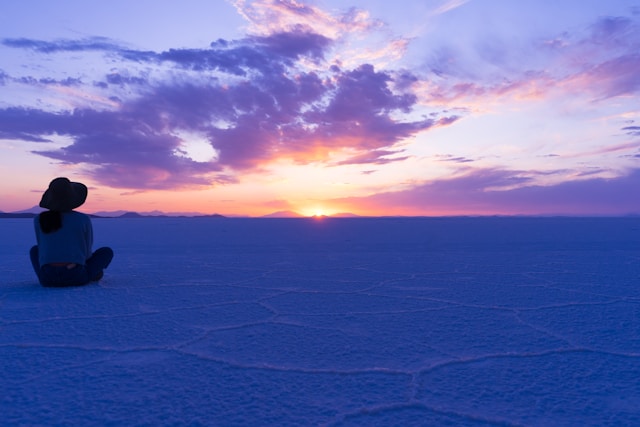
Let me tell you a secret: the best time to visit Uyuni Salt Flats is both a simple answer and a complicated one. Simple, because it really boils down to two options: do you want the giant mirror of the rainy season or the cracked white desert of the dry one? Complicated, because whichever you choose, Uyuni will mess with your sense of reality.
I still remember the first time I stepped onto that endless sheet of white. The air was thin, the horizon blurred, and my brain kept asking: Am I standing on the earth or floating through the sky?
Feel Uyuni With All Your Senses
Uyuni is not just something you see — it’s something you feel. The crunch of salt beneath your boots, the sting of cold wind on your cheeks, the blinding reflection of the sky in every direction. At night, the silence is so complete you can hear your own heartbeat while the Milky Way burns above you. It smells of rain, of earth, of a world untouched. Touch the salt, taste the dry air, lose yourself in the horizon — every sense reminds you that this place is alive, and it wants to stay with you long after you’ve left.
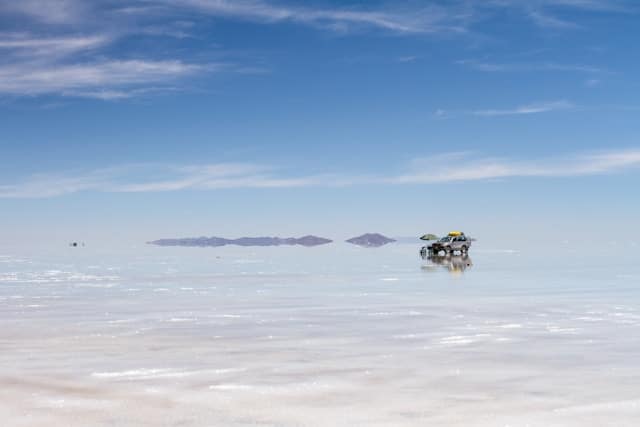
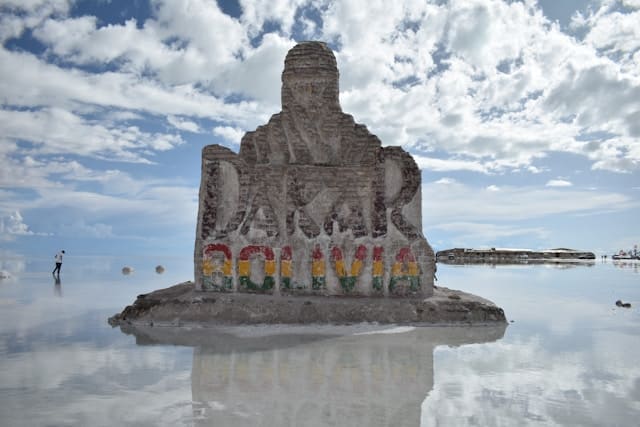
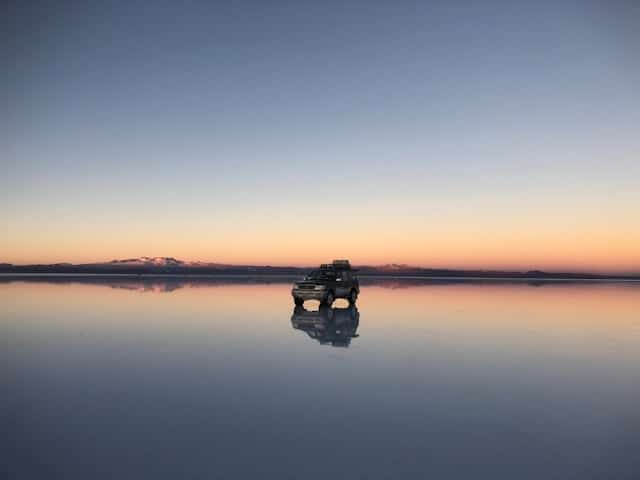
Rainy Season: The World’s Biggest Mirror (December – April)
If you’ve seen those impossible-looking shots of people walking on the sky, this is the season. A thin layer of rainwater can turn the Salar into a giant mirror, with the best chances usually between January and March. But Uyuni makes no promises: the effect depends entirely on rainfall and conditions that day.
Pros:
-
The legendary mirror effect, pure magic.
-
Warm nights compared to the dry season.
-
Photos that make people question reality.
Cons:
-
Flooded roads → you can’t always cross the Salar.
-
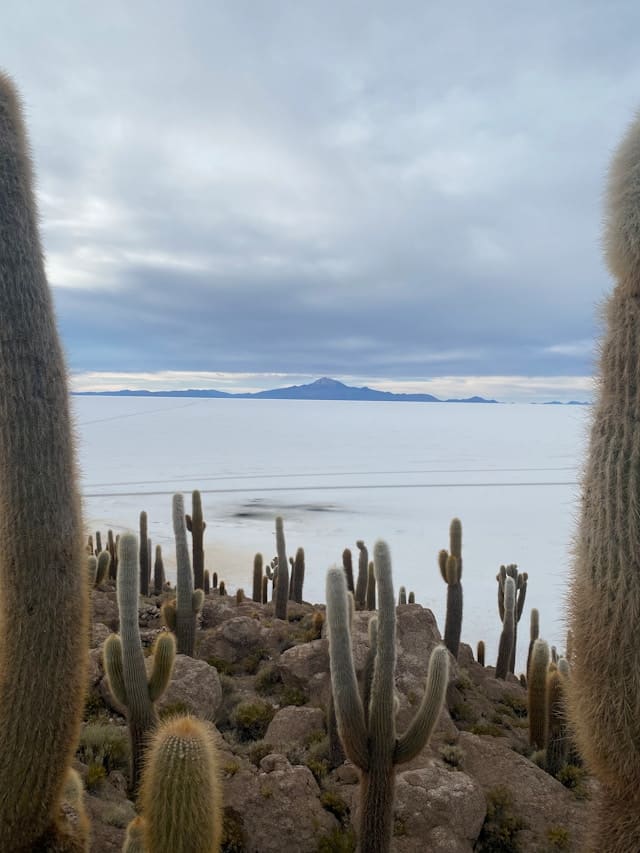
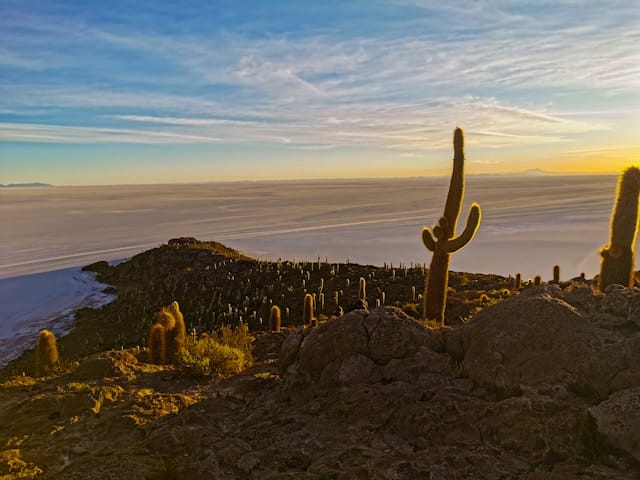
Access to Isla Incahuasi often closed.
-
Logistics are tougher, rides bumpier, tours more limited.
Dry Season: A White Desert on Steroids (April – November)
Come in the dry months and you’ll meet a different Uyuni. No mirrors. No reflections. Just a white desert that looks like someone spilled the world’s largest bag of salt.
The ground fractures into perfect hexagons, like nature’s own geometry class. You can walk for hours and hear nothing but the crunch of salt under your boots. And when night falls? The Milky Way explodes above you, so sharp it feels like you could reach up and grab a star.
Pros:
-
Easy access to all areas, including Isla Incahuasi.
-
Epic stargazing thanks to clear skies.
-
Safer logistics, smoother tours.
Cons:
-
Nights drop below freezing.
-
No mirror effect.
The Ugly true about Budget Tours in Uyuni

So, What’s the Best Time to Visit Uyuni Salt Flats?
That’s the million-dollar question. The truth: there’s no wrong season — only the one that fits your expectations.
- January–March: Best chance of the mirror effect. Wetter, less predictable, occasionally limited access.
- May–September: Dry, very cold, excellent access and dramatic white salt patterns.
- October–November: A good shoulder season for clearer routes, warmer temperatures and fewer visitors.
There is no single best month — only the version of Uyuni you want to see.
👉 The best time to visit Uyuni Salt Flats depends on whether you’re chasing the mirror or the stars.
The Road from Atacama
For the full pilgrimage, start in San Pedro de Atacama, Chile. Three days later you’ll stumble into Uyuni, dazed and in love. Along the way, you’ll pass volcanic deserts, emerald lagoons, geysers spitting sulfur, and flocks of flamingos looking like bored runway models.
Do it private. Do it slow. Do it with a driver who knows the road. Because trust me, this is not the place where you want your jeep to break down.
Notes from the Road (Survival Tips)
-
Book ahead in rainy season.
-
Dress in layers: warm clothes for nights, light ones for days, waterproofs for the mirror.
-
Bring cash — ATMs are scarcer than bathrooms.
-
Altitude is no joke: hydrate and pace yourself.
-
Extra batteries — cold drains them fast.
Why We Go
Travel isn’t just about ticking boxes. It’s about letting a place change you. Uyuni does that better than most.
At Pie Experiences, we’ve built tours that aren’t about rushing or cutting corners. They’re about slowing down, soaking it in, and leaving with stories worth telling.
-
3-Day Atacama to Uyuni Adventure (Private): The ultimate cross-border journey.
-
2D/1N Uyuni Salt Flats Tour: Short, intense, unforgettable.
-
Uyuni Stargazing Experience: Because some skies are too beautiful not to sleep under.
👉 Plan your Uyuni trip with us.
Final Thoughts
Uyuni doesn’t care about your comfort. It will freeze you, flood you, dazzle you, and leave you humbled.
The best time to visit Uyuni Salt Flats isn’t about chasing perfect weather. It’s about deciding whether you want to walk across the sky or sleep under galaxies you didn’t know existed.
Either way, you’ll never forget it.

FAQs – Real Traveler Questions about best time to travel to Uyuni Salt flats
When is the best time to see the mirror effect in Uyuni?
The best chance is usually between January and March, during the heart of the rainy season. A thin layer of water can turn the Salar into a giant reflection, but the mirror effect is never guaranteed — it depends on rainfall, wind and conditions that day.
Is the mirror effect guaranteed during the rainy season?
No. Even in January or February, some days are too dry, too windy or too flooded. Uyuni is spectacular year-round, but the exact landscape changes constantly.
Can I visit Incahuasi Island during the rainy season?
Sometimes, but not always. When the Salar is heavily flooded, access to Incahuasi Island may be restricted or impossible. Routes are adjusted depending on conditions.
What is the best time for photography in Uyuni?
It depends on what you want to photograph. January to March is best for reflections and mirror images. May to November offers the classic white salt crust, geometric patterns, clearer routes and dramatic sunsets.
What are the coldest months in Uyuni?
June, July and August are usually the coldest months, especially at night and in the high-altitude lagoons of southern Bolivia. Temperatures can drop below freezing, so proper layers matter.
What is the best time for stargazing in Uyuni?
The drier months, particularly May to September, usually offer clearer skies and lower chances of rain. The Altiplano is excellent for stargazing, but moonlight and cloud cover will always affect visibility.
Is the rainy season a good time for a 3-day Uyuni tour?
Yes, but the route may need to be more flexible. Heavy rain can affect access to certain parts of the Salar and some high-altitude areas. This is one reason a private Uyuni tour can be useful: the itinerary can be adjusted more easily to the conditions.
Should I choose the rainy season or the dry season?
Choose the rainy season if seeing the mirror effect is your priority. Choose the dry season if you prefer easier access, clearer routes, colder nights and the classic white desert landscape.
Is a private tour better during unpredictable weather?
For travelers who value flexibility, often yes. A private 4×4 gives you more freedom to adjust stops, photography time and the route when weather or road conditions change.